Acoustic Modeling Breakthroughs Reshape How Sound Designers Build Reactive Environments for Cross-Platform Indie Titles
Logan Becker · May 20, 2026

Acoustic Modeling Breakthroughs Reshape How Sound Designers Build Reactive Environments for Cross-Platform Indie Titles
Advancements in acoustic modeling have enabled sound designers to simulate how sound interacts with virtual spaces in real time, and these changes have altered workflows for building reactive audio systems in cross-platform indie titles. Researchers developed algorithms that calculate reflections, absorption, and diffraction with greater precision than previous methods, which relied on precomputed reverb zones or basic impulse responses.
Game engines now integrate these models directly into their audio pipelines, and this integration allows environments to respond dynamically to player actions without requiring extensive manual adjustments for each platform. Data from industry reports shows that processing overhead has dropped by up to 40 percent in optimized implementations, which helps smaller teams allocate resources more efficiently across mobile, console, and PC builds.
Core Technical Shifts in Real-Time Simulation
Traditional approaches used static audio layers that triggered based on simple rules, yet newer systems employ ray-tracing techniques adapted from visual rendering pipelines. These rays trace sound paths through geometry at interactive frame rates, and they update occlusion and reverberation parameters on the fly when objects move or surfaces change material properties. Observers note that this method produces consistent results whether the title runs on a high-end desktop GPU or a mobile chipset with hardware acceleration for spatial audio.
Engine updates released in early 2026 incorporated machine-learning models trained on recorded room impulse responses from real-world spaces. The models predict acoustic behavior for procedural environments generated at runtime, and they reduce the need for designers to author separate audio assets for each target device. One studio working on a puzzle adventure title reported that a single set of acoustic parameters now functions across three platforms after the adoption of these trained predictors.
Impact on Cross-Platform Development Pipelines
Indie teams often juggle multiple deployment targets with limited engineering staff, and acoustic modeling tools address this constraint by providing unified parameter sets that scale automatically. Middleware packages expose controls for material coefficients and listener positioning that remain stable regardless of underlying hardware differences. According to documentation from the Interactive Audio Special Interest Group, developers can export a single acoustic profile and let the runtime handle platform-specific optimizations such as reduced ray counts on lower-power devices.
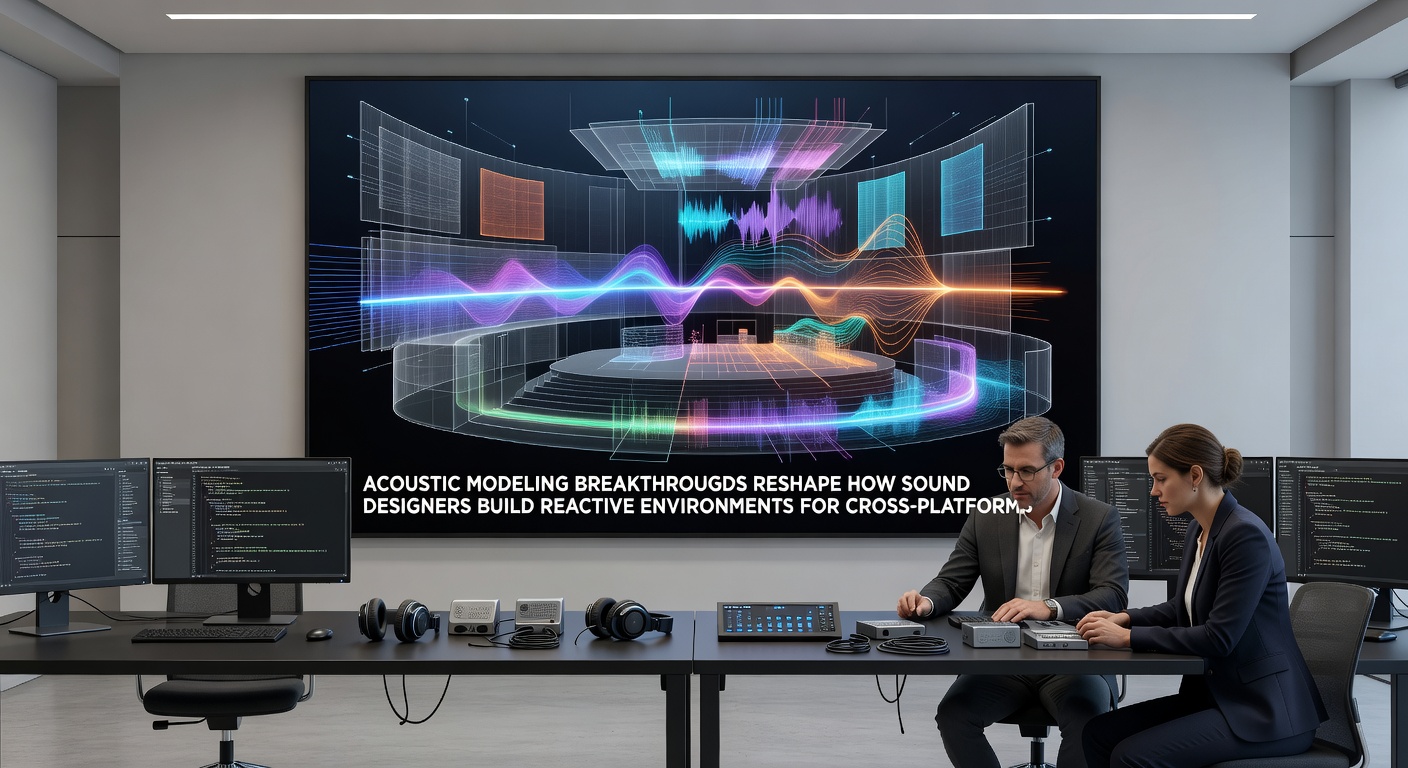
Testing protocols have evolved alongside the technology. Automated suites now compare rendered audio waveforms against reference recordings taken from physical prototypes of level geometry, and discrepancies trigger alerts before builds reach certification. This process catches issues that previously surfaced only after player reports, and it shortens iteration cycles for remote teams collaborating across time zones.
Case Examples from Recent Indie Releases
Take one narrative-driven exploration game that launched in spring 2026. Its sound team constructed cave networks whose echo patterns shifted when structural supports collapsed, and the same audio behavior appeared on both Steam Deck and Android versions without separate mixing passes. The implementation used hybrid ray and wave-based solvers that switched based on scene complexity, which kept memory usage within mobile limits while preserving detail on desktop hardware.
Another project focused on cooperative survival mechanics applied similar techniques to dynamic weather systems. Rain intensity altered surface absorption values in real time, and footsteps produced distinct reverberation depending on whether characters stood under shelter or in open fields. Developers shared their parameter files through open repositories, which allowed other small studios to adapt the configurations for their own projects without starting from scratch.
Current Landscape in May 2026
By May 2026 several academic and industry partnerships have produced open datasets of acoustic measurements from diverse architectural styles, and these resources support further refinement of simulation accuracy. Conferences scheduled for later in the year feature workshops on integrating these datasets into existing audio middleware, and attendance figures indicate growing interest among independent developers who previously outsourced sound work.
Standards bodies continue to refine interchange formats for acoustic metadata, which ensures that profiles created in one tool import cleanly into another. This compatibility reduces friction when teams switch engines mid-project or add support for emerging hardware such as handheld consoles with improved spatial audio chips.
Conclusion
Acoustic modeling continues to mature through combined advances in hardware acceleration, machine learning, and standardized data exchange. Sound designers working on cross-platform indie titles now access tools that deliver reactive audio environments with reduced manual overhead, and the resulting consistency benefits both development efficiency and player immersion across devices. Ongoing research and shared resources point toward further refinements that will keep these capabilities accessible to smaller teams in the years ahead.