Browser APIs Fueling Hybrid Reality Experiments Among Global Indie Teams on Mixed Device Setups
Logan Becker · Aug 1, 2026
Browser APIs Fueling Hybrid Reality Experiments Among Global Indie Teams on Mixed Device Setups
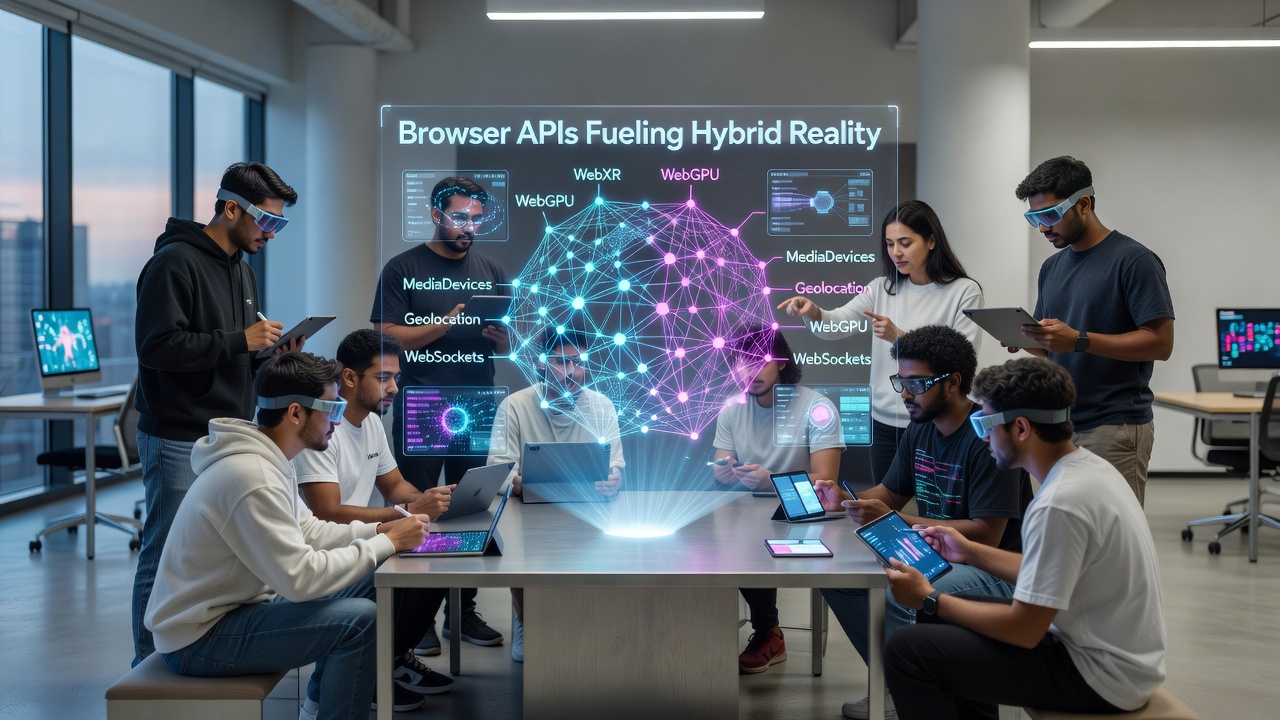
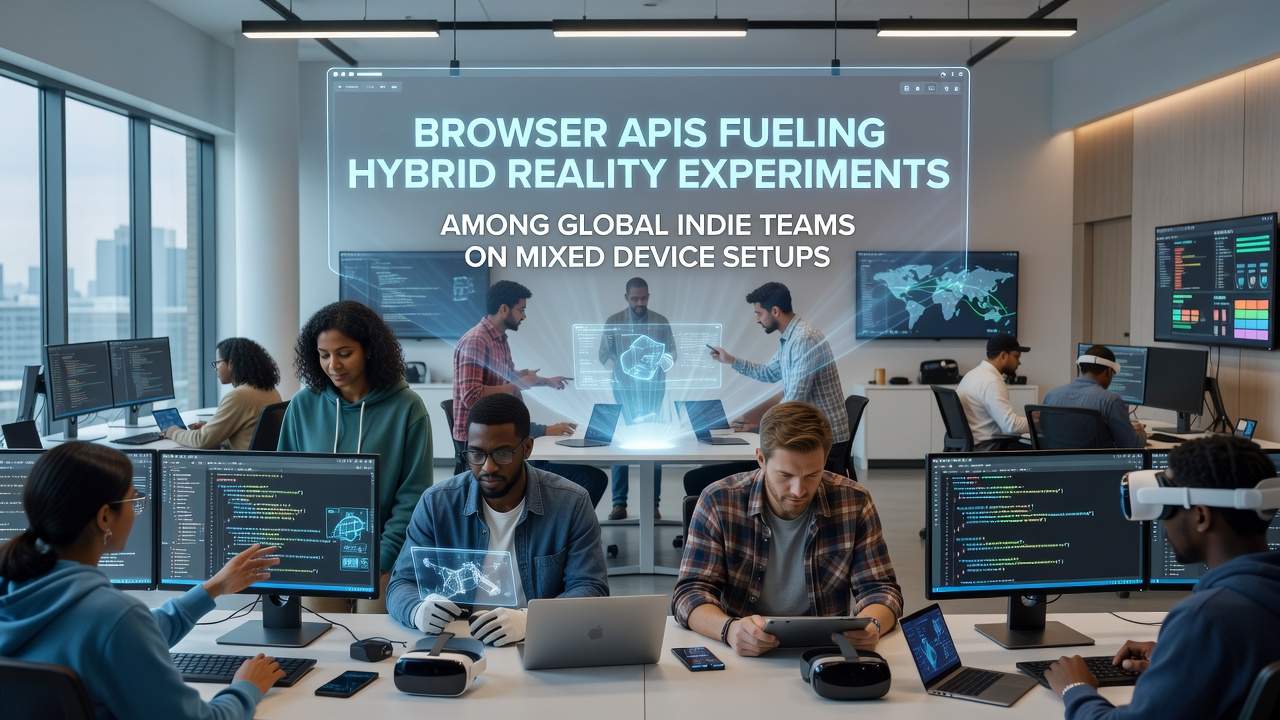
Browser APIs such as WebXR and related sensor interfaces have enabled indie development teams to run hybrid reality experiments on combinations of smartphones, tablets, laptops, and standalone headsets without requiring native applications or specialized hardware stacks. These tools allow real-time access to device cameras, motion sensors, and spatial tracking directly through standard web browsers, which simplifies collaboration across different operating systems and regions. Teams in multiple countries have used these capabilities to build shared prototypes that respond to user movements and environmental data collected from whatever devices participants happen to own.
Core APIs Driving Cross-Device Compatibility
The WebXR Device API provides standardized methods for rendering stereoscopic views and handling controller input, while complementary interfaces like DeviceOrientationEvent and Geolocation supply orientation and position data that update scenes continuously. WebAssembly modules handle performance-intensive calculations such as physics simulation and spatial mapping, which keeps frame rates stable even when browsers run on mid-range mobile processors alongside higher-powered laptops. Global indie groups coordinate through shared code repositories and test sessions that launch from any modern browser, eliminating the need for platform-specific builds during early experimentation phases.
Researchers at the Australian National University documented usage patterns in 2025 showing increased adoption of these APIs among distributed teams working with mixed hardware inventories. Data collected from public web analytics platforms indicated that sessions involving spatial tracking rose steadily through mid-2026, particularly in projects that combined handheld devices with desktop displays for collaborative scene editing.
Workflows in Distributed Indie Studios
Indie teams often begin with browser-based prototypes that map real-world surfaces using device cameras and then layer virtual elements that multiple users can manipulate simultaneously. One studio in Canada paired with partners in Japan and Germany to develop an exploration tool that adjusted lighting and object placement based on sensor input from phones held by remote testers while desktop users reviewed the same scene on larger screens. Sessions run in August 2026 demonstrated seamless handoff between devices, with positional data synchronized through WebRTC connections that maintained consistency across varying network conditions.
These setups rely on open specifications maintained by standards bodies, which ensures that updates to one API propagate across browsers without forcing teams to rewrite core logic. Observers note that the approach reduces hardware costs because participants contribute whatever devices they already own rather than purchasing uniform equipment sets.
Technical Integration and Performance Factors
Performance remains tied to how efficiently browsers expose GPU resources through interfaces like WebGPU, which complements WebXR by allowing direct access to graphics pipelines. Teams report that combining these APIs permits procedural generation of environments that adapt to live sensor streams from multiple devices at once. For instance, a project might use tablet gyroscopes to control virtual camera angles while a connected laptop processes additional lighting calculations streamed back through the same browser session.
Industry reports from the Interactive Software Federation of Europe highlight that browser-based tools accounted for a growing share of early-stage mixed reality work among smaller studios in 2026. The federation's annual survey tracked project counts and noted particular growth in setups that mixed consumer smartphones with entry-level headsets, all orchestrated through web standards rather than proprietary engines.
Challenges Addressed Through Standards Evolution
Latency differences between device types present ongoing hurdles, yet browser vendors have iterated on timing APIs that provide more precise synchronization across networked sessions. Privacy controls built into sensor access prompts require explicit user consent before data collection begins, which aligns with regulatory expectations in regions such as the European Union and Canada. Teams manage these constraints by designing experiments that request only the minimal permissions necessary for each test phase.
Global coordination also benefits from language-agnostic scripting options available in browsers, allowing developers fluent in different programming backgrounds to contribute modules that integrate directly into shared prototypes. This flexibility supports the rapid iteration cycles typical of indie workflows operating across time zones.
Conclusion
Browser APIs continue to expand the range of hybrid reality experiments possible for indie teams that rely on diverse device collections rather than standardized hardware. As specifications mature and browser support widens, distributed groups gain additional avenues for testing spatial interactions and collaborative features without heavy infrastructure investments. The pattern observed through 2026 suggests further integration of sensor and rendering interfaces will support even broader participation from teams worldwide.