Browser Physics Engines Narrow Divides Between Hobbyists and Experts
David Sullivan · Aug 3, 2026
Browser Physics Engines Narrow Divides Between Hobbyists and Experts
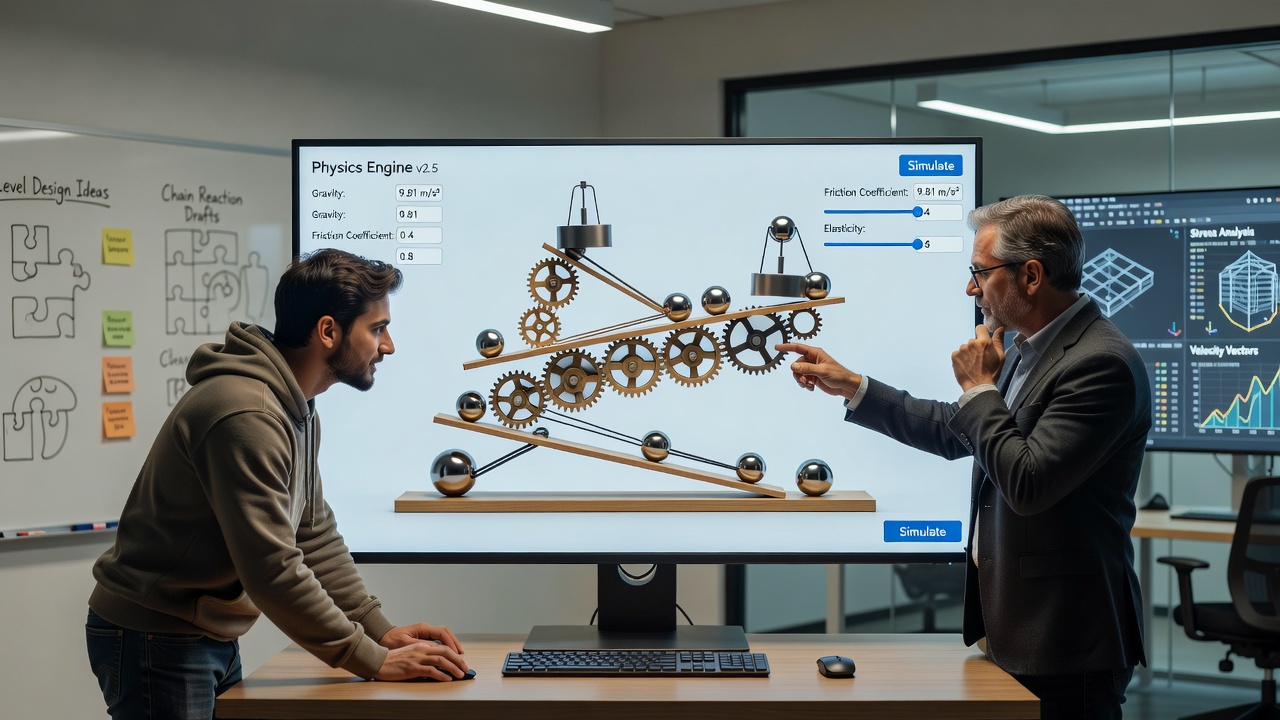
Browser-based physics engines have expanded access to simulation capabilities that once required specialized hardware and proprietary software suites, and developers now build interactive environments directly in web browsers using standards such as WebGL and WebAssembly. These tools handle collision detection, rigid body dynamics, and fluid simulations while operating across consumer devices without additional installations, and data from industry reports indicate that adoption rates among independent creators rose steadily through 2025.
Core Technologies Powering Web Simulations
Standards bodies including the World Wide Web Consortium maintain specifications that enable consistent physics calculations across different browsers, and engine libraries such as Cannon.js and Ammo.js compile C++ physics code into WebAssembly modules that execute at near-native speeds. Researchers at institutions like the Technical University of Munich documented performance benchmarks showing that complex scenes with thousands of interacting objects maintain stable frame rates on mid-range laptops, while integration with HTML5 canvas elements allows real-time rendering without plugins.
Developers often combine these engines with JavaScript frameworks for scene management, and the resulting pipelines support both two-dimensional puzzle mechanics and three-dimensional soft-body interactions. Figures released by the International Game Developers Association in 2025 revealed that over 40 percent of surveyed browser game projects incorporated at least one open-source physics library, reflecting broader use among small teams.
Tools for Casual Puzzle Creators
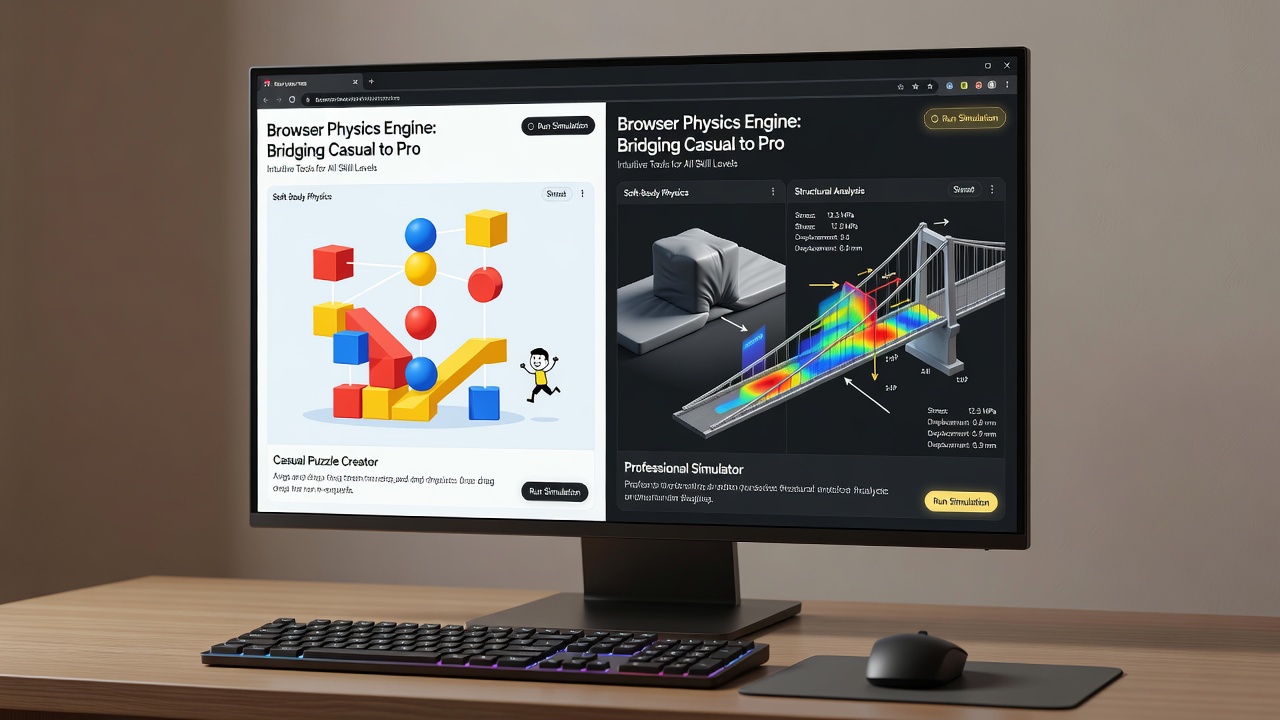
Platforms such as PlayCanvas and Phaser provide visual editors that abstract low-level physics parameters into drag-and-drop interfaces, and creators assemble levels by assigning mass, friction, and constraint values through graphical panels rather than code alone. These environments compile projects into standalone web applications that run on mobile browsers as well as desktop systems, and tutorials hosted on developer forums document step-by-step workflows for implementing gravity wells or destructible structures.
One documented workflow involves exporting models from free modeling software into glTF format, then importing them into browser engines where joint constraints and collision layers receive automatic optimization passes. Participation in online communities shows thousands of shared prototypes each month, and many of these assets later migrate into larger productions after refinement.
Professional Studio Integration Patterns
Established simulation studios now incorporate browser engines during early prototyping phases, and teams export validated parameters into full-featured desktop applications such as Unreal Engine or Unity for final asset pipelines. This hybrid approach reduces iteration cycles because stakeholders review browser-hosted demos without installing specialized viewers, and version control systems track changes across both web and native branches.
Data compiled by the National Research Council Canada in mid-2025 indicated that studios using web-first physics validation reported 25 percent faster approval times for mechanical designs in training simulations. Engineers configure server-side instances of the same engines to handle multiplayer synchronization, and latency measurements from distributed test networks confirm sub-50-millisecond response times under typical broadband conditions.
Cross-Platform Compatibility Developments
Updates scheduled for August 2026 include expanded support for WebGPU within major browser releases, and this change enables higher-fidelity lighting calculations alongside existing physics routines without dedicated graphics hardware. Compatibility testing suites maintained by browser vendors verify consistent behavior across operating systems, and independent audits confirm that discrepancies in floating-point precision have narrowed to less than 0.001 percent between implementations.
Academic collaborations between European and North American laboratories produced open datasets of benchmark scenes that any developer can load into browser engines for validation, and these resources standardize evaluation criteria for both hobbyist and commercial projects. Shared scripting interfaces further allow puzzle logic written for casual titles to transfer into studio-scale environments with minimal refactoring.
Conclusion
Browser-based physics engines continue to serve as accessible entry points for simulation work while meeting performance thresholds required by professional pipelines, and ongoing standards evolution supports wider hardware compatibility. Participation metrics from developer surveys and benchmark repositories demonstrate sustained growth in both casual and studio contexts through the present period.