Cloud-Based Rendering Clusters Transform Asset Pipelines for Distributed Indie Studios
Vera Butler · Jun 8, 2026
Cloud-Based Rendering Clusters Transform Asset Pipelines for Distributed Indie Studios
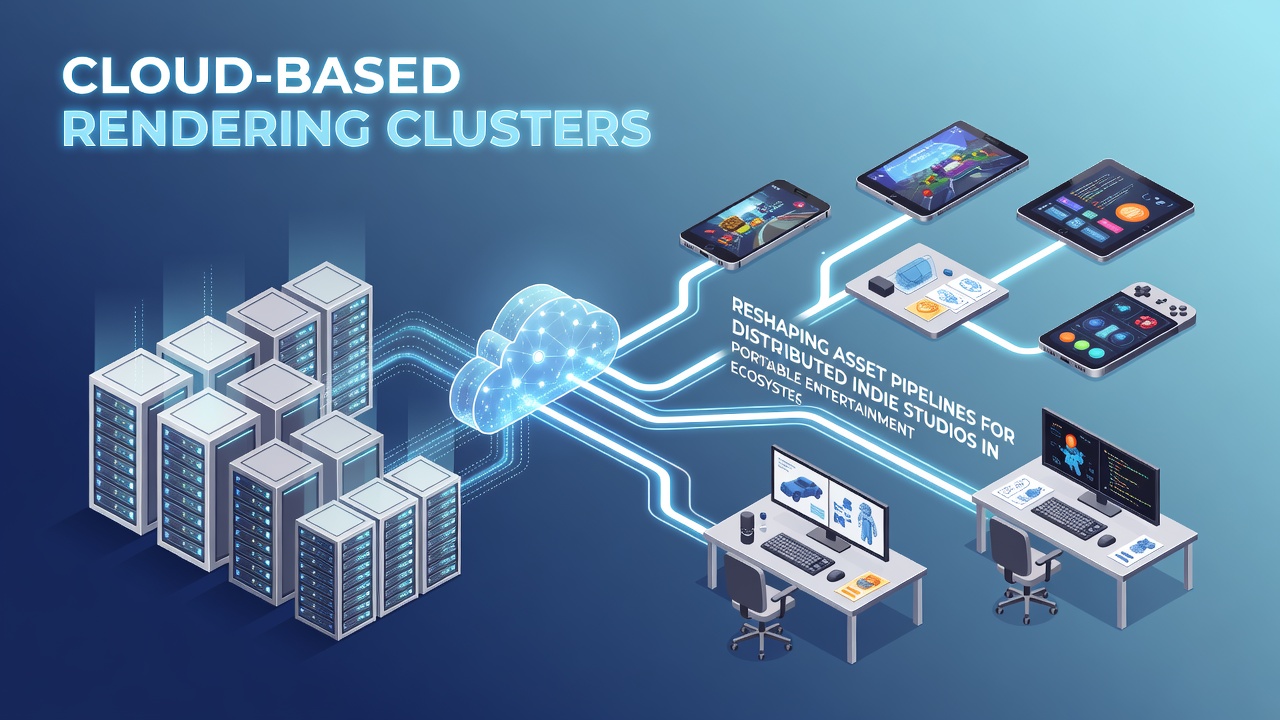
Cloud-based rendering clusters now handle complex asset generation tasks that once required dedicated on-site hardware, and this shift allows distributed indie studios to maintain consistent output across portable entertainment platforms. Teams spread over multiple regions upload raw models and textures to centralized clusters where GPUs process lighting, physics simulations, and texture baking in parallel. The processed files return ready for integration into mobile and handheld builds, which reduces the time between concept and playable prototype.
Asset Pipeline Adjustments in Practice
Studios coordinate through version-controlled repositories that connect directly to rendering queues, while automated scripts manage file transfers and priority scheduling based on project deadlines. Data from industry reports shows that average render times for high-poly character assets dropped by 65 percent between 2023 and 2025 when teams adopted cluster-based workflows. Portable titles benefit because final assets arrive optimized for lower-power devices, including variable screen resolutions and memory constraints common in handheld ecosystems.
One studio operating across North America and Southeast Asia integrated its pipeline with a European cloud provider in early 2025; the change eliminated the need for local render farms and cut monthly infrastructure costs by nearly half. Artists receive feedback loops within hours rather than overnight, and this speed supports rapid iteration on animation cycles and environment details that must scale across different portable form factors.
Collaboration Across Distributed Teams
Distributed indie groups rely on shared cloud workspaces where multiple contributors access the same asset library without duplicating large files locally. Synchronization happens through delta updates that transmit only changed elements, which keeps bandwidth usage manageable even when team members connect from regions with variable network quality. Research from the International Game Developers Association indicates that studios using these methods completed cross-platform releases 30 percent faster in 2025 compared with previous years that depended on local rendering hardware.
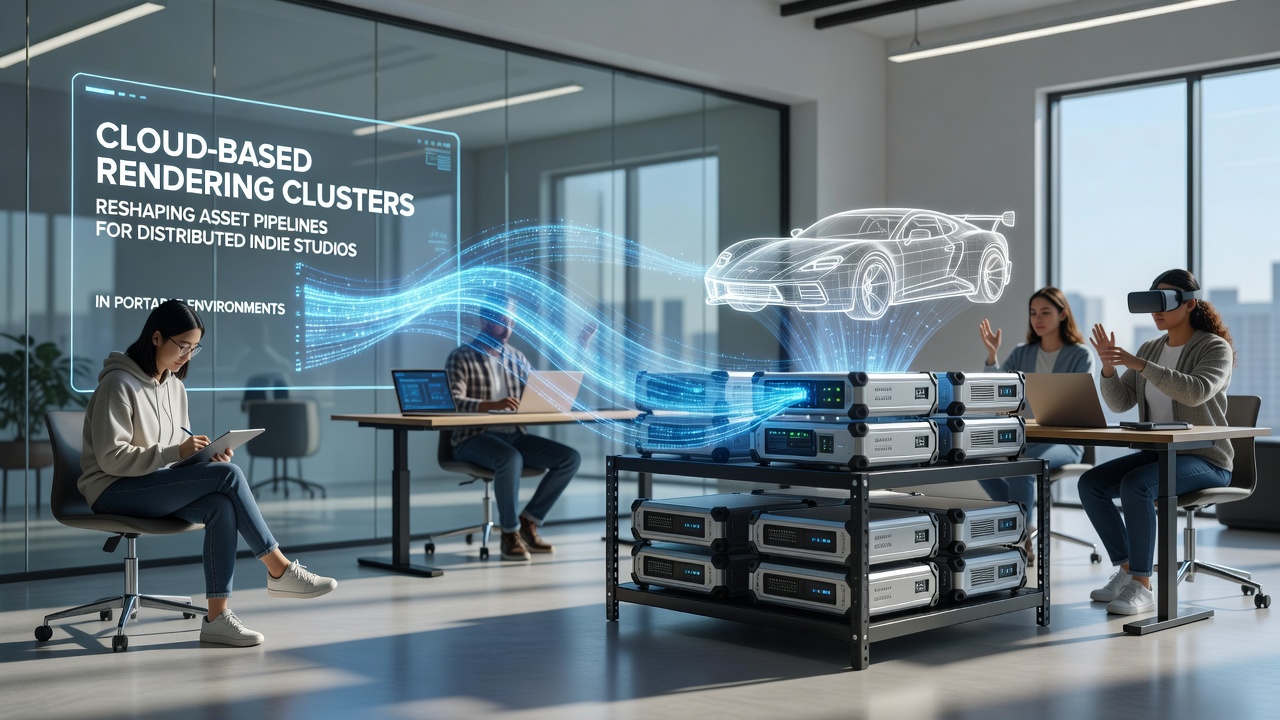
Security protocols built into the clusters encrypt data both in transit and at rest, satisfying compliance requirements from multiple jurisdictions. In June 2026 the Asia-Pacific Games Industry Forum highlighted case studies where Australian and Canadian studios jointly developed a portable title using unified rendering resources; the project delivered assets that met performance targets on both high-end handhelds and entry-level mobile devices without separate optimization passes at each location.
Technical Integration Points
Modern game engines now include native plugins that route rendering jobs to cloud clusters while preserving local viewport previews. These plugins handle job queuing, cost estimation, and automatic fallback to lower-priority instances during peak demand periods. Texture compression algorithms run on the cluster side before files return, which ensures compatibility with portable device standards such as ASTC and ETC2. Observers note that error rates in asset handoff decreased once studios adopted standardized metadata schemas that travel with each rendered file.
Network latency remains a consideration when teams work in real time, yet asynchronous workflows mitigate most delays by allowing artists to continue modeling while previous renders complete. Bandwidth monitoring tools alert users when upload volumes approach limits, and compression settings adjust automatically based on connection profiles stored per team member.
Resource Allocation Trends
Usage statistics compiled by academic researchers at the University of Tokyo in late 2025 revealed that indie studios allocated 40 percent of their cloud budgets to rendering clusters specifically for portable projects. The remaining portion covered storage and simulation workloads, yet rendering consistently represented the largest single expense category. Flexible pricing models let smaller teams reserve capacity in advance during known crunch periods, while spot instances handle non-urgent tasks at reduced rates.
These allocation patterns support sustained output even when individual contributors operate on modest local machines. The clusters absorb the heavy computational load, leaving portable testing and final QA as the primary on-device activities.
Conclusion
Cloud rendering infrastructure continues to integrate deeper into asset pipelines as portable entertainment ecosystems expand. Studios gain consistent access to high-performance compute regardless of physical location, and standardized connection methods reduce friction between creative roles. Data collected through 2026 shows measurable gains in iteration speed and cost predictability when teams align their workflows with cluster capabilities.