Data Synchronization Methods Linking Smartphone Sensors to Virtual Reality Environments in Independent Game Projects
Leon Vogel · Jun 24, 2026
Data Synchronization Methods Linking Smartphone Sensors to Virtual Reality Environments in Independent Game Projects
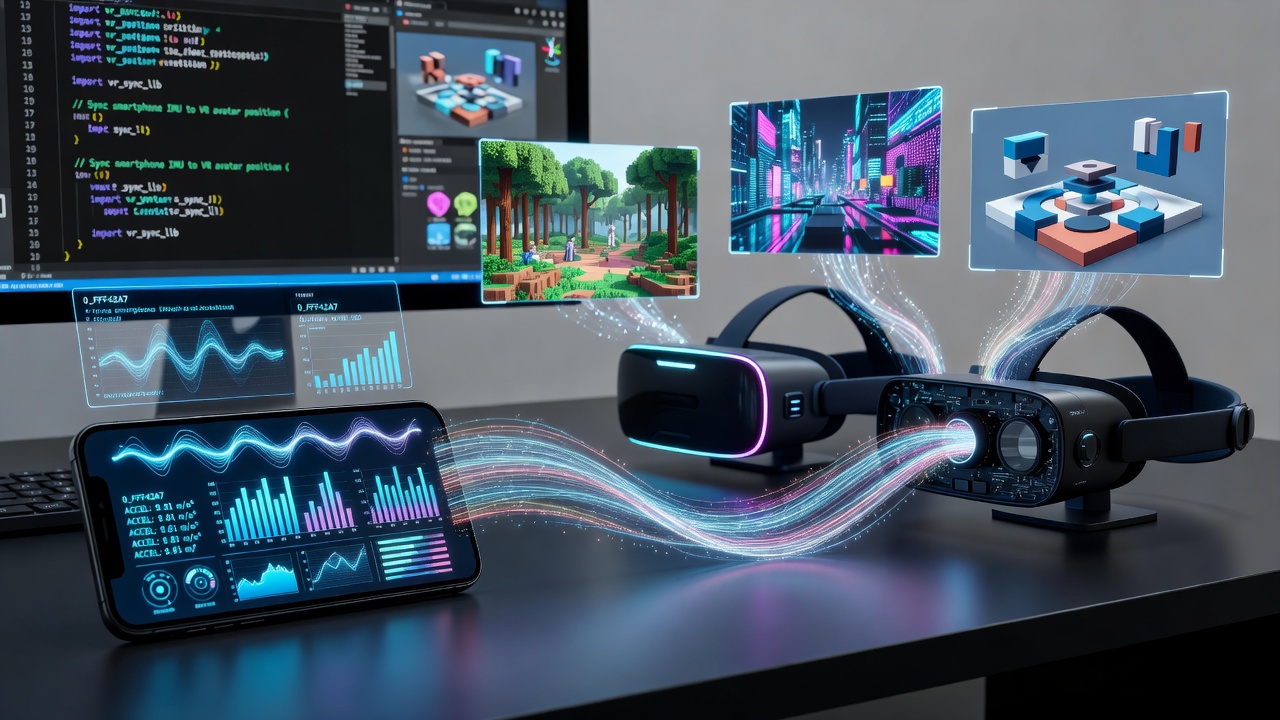
Independent game developers often combine smartphone sensors with virtual reality headsets to create immersive experiences without relying on expensive dedicated hardware, and synchronization methods form the backbone of these integrations because they align motion data from accelerometers, gyroscopes and magnetometers with positional tracking inside VR environments.
Core Sensor Data Pathways in Indie Setups
Smartphone sensors capture linear acceleration, angular velocity and orientation changes while VR systems track head and hand movements, yet the real work happens when developers route these streams through protocols that handle timing offsets and packet loss. Teams frequently use Bluetooth Low Energy for low-power connections or Wi-Fi Direct for higher bandwidth transfers, and each choice affects how quickly data reaches the rendering pipeline in real time.
Time-stamping at the sensor level allows engines to reconcile delays between mobile devices and headsets, whereas Kalman filters or complementary algorithms fuse noisy readings into stable outputs that prevent jitter during gameplay. Observers note that many small studios build custom middleware layers on top of Unity or Unreal plugins to manage these fusions, which reduces drift when players move across physical spaces mapped to virtual worlds.
Protocol Choices and Latency Management
UDP-based messaging dominates quick synchronization tasks because it avoids the overhead of TCP handshakes, and developers add sequence numbers plus interpolation routines to smooth out missing packets. Research from institutions across the European Union has shown that combining NTP for clock alignment with predictive buffering keeps end-to-end latency under 40 milliseconds in controlled indie tests, which matters for titles that rely on precise gesture inputs.
Some projects incorporate MQTT brokers for publish-subscribe patterns that let multiple smartphones feed data into a shared VR session, while others stick with raw socket connections for minimal overhead. Data compression techniques such as delta encoding further cut bandwidth demands, allowing teams to maintain stable links even on consumer-grade wireless networks that indie developers typically access.
Implementation Examples Across Studios
One developer collective in Canada integrated smartphone tilt sensors into a puzzle VR game by mapping gyroscope quaternions directly to object rotations inside the environment, and their approach relied on event-driven callbacks that trigger updates only when thresholds are crossed. Another group working with Australian university labs demonstrated how magnetometer corrections counteract electromagnetic interference from nearby electronics, which keeps orientation data consistent across longer play sessions.
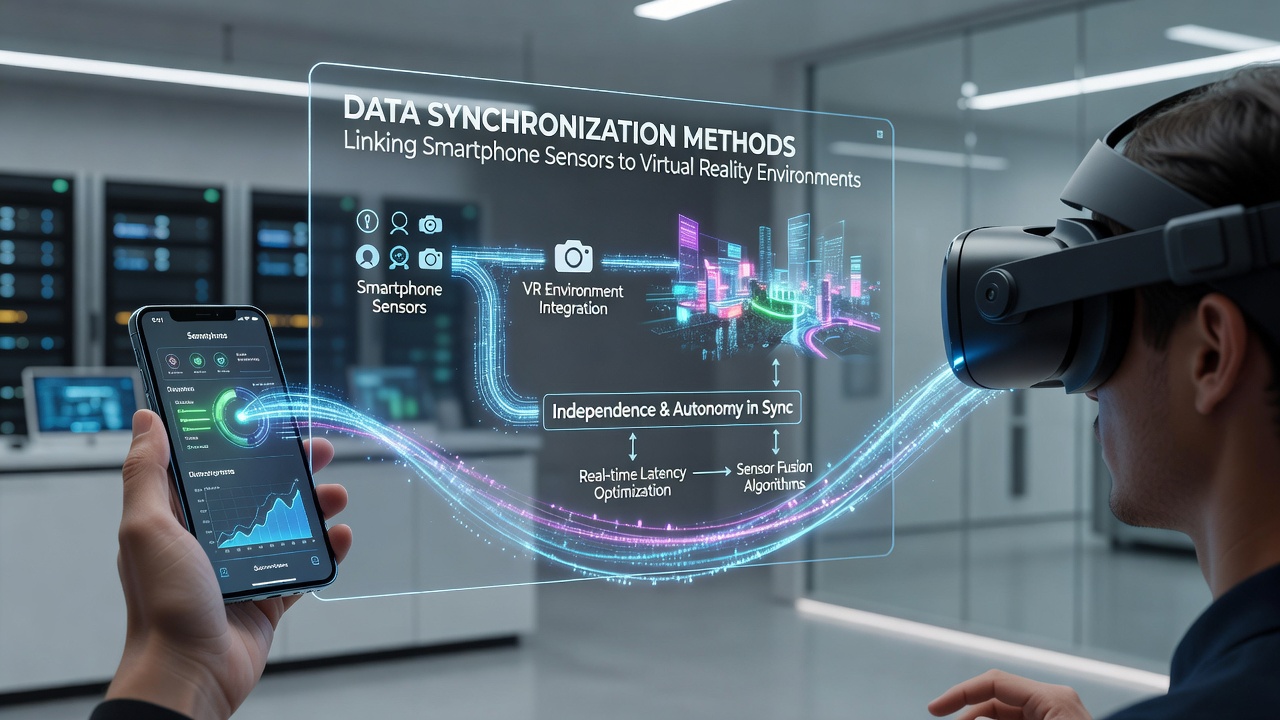
By June 2026 several open-source toolkits had incorporated refined sensor fusion libraries that automatically detect connection quality and switch between available protocols, giving smaller teams access to methods previously limited to larger studios. These updates also include calibration wizards that guide users through multi-axis alignment procedures using simple on-screen prompts.
Calibration Routines and Error Correction
Initial setup involves aligning smartphone coordinate systems with VR tracking origins through static poses and dynamic movements, after which bias estimation algorithms continuously adjust for temperature drift and hardware variations. Error correction often employs particle filters when standard fusion methods fall short, especially in environments with rapid changes in lighting or magnetic fields that can affect sensor accuracy.
Teams document their calibration sequences in project repositories so others can replicate results, and shared code samples frequently highlight the importance of consistent sampling rates across devices to avoid desynchronization artifacts during fast-paced sequences.
Network Considerations for Distributed Teams
Remote collaborators sometimes test synchronization over cloud relays when physical co-location is not possible, yet direct peer connections remain preferred for lowest latency. Adaptive bitrate adjustments respond to fluctuating network conditions by prioritizing critical orientation data over secondary accelerometer streams, which preserves core interaction fidelity even when bandwidth drops.
Conclusion
Data synchronization methods continue to evolve as smartphone hardware improves and VR frameworks adopt more flexible input layers, allowing independent projects to deliver experiences that once required specialized equipment. Developers who master these techniques gain flexibility in prototyping new interaction models while staying within modest budgets, and ongoing refinements in protocol efficiency point toward even tighter integration between mobile sensors and virtual environments in the years ahead.