eGPU Docks Unleash Laptop Fury: Thunderbolt Tech Delivers Desktop Muscle on the Move
Leon Vogel · Apr 25, 2026
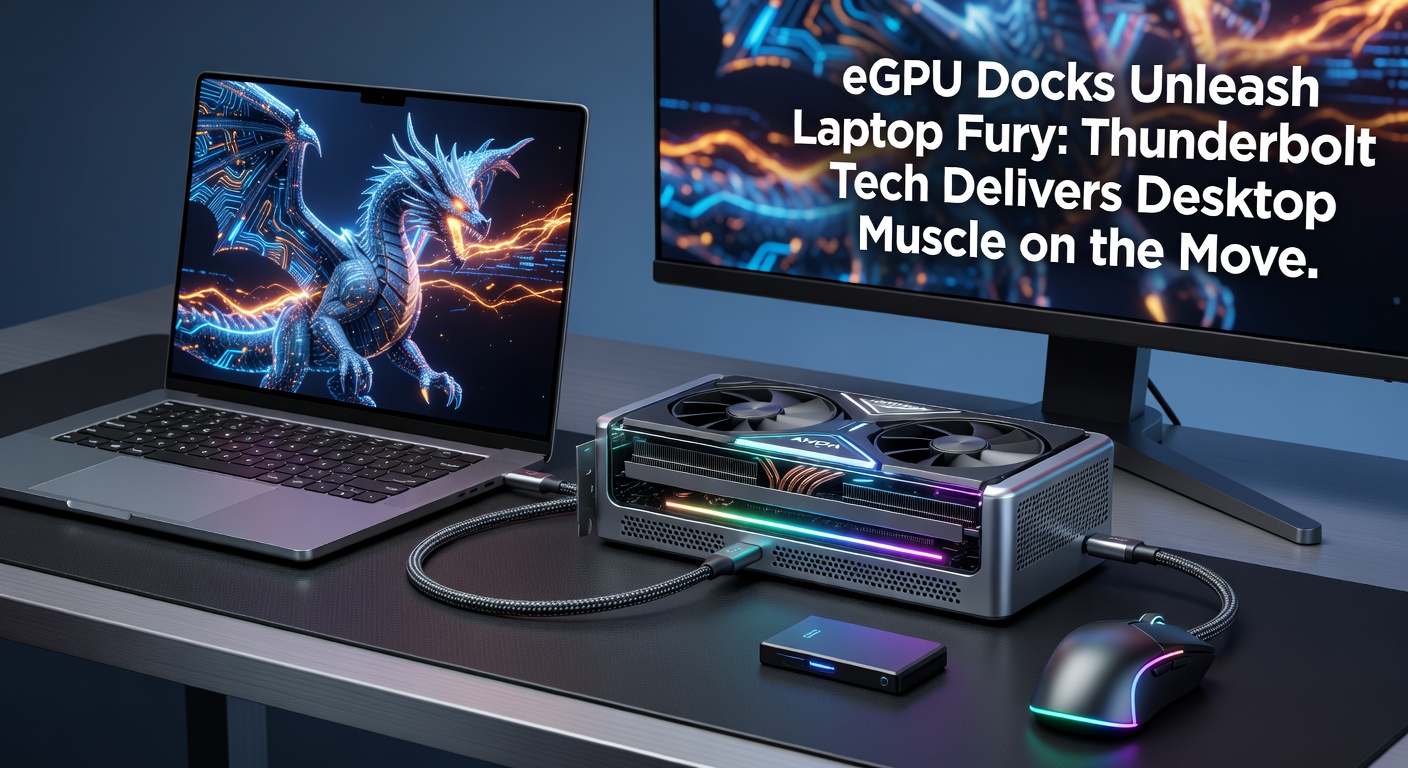
eGPU Docks Unleash Laptop Fury: Thunderbolt Tech Delivers Desktop Muscle on the Move
People who lug laptops around for work or play often hit a wall with built-in graphics; those integrated GPUs handle everyday tasks fine, but they choke on demanding games, video edits, or 3D renders, leaving users craving desktop-level punch without ditching portability. Enter eGPU docks, enclosures that slot in high-end desktop graphics cards and link up via Thunderbolt ports, transforming slim machines into beasts capable of 4K gaming or ray-traced simulations on the fly.
How eGPU Docks Work: Thunderbolt as the Power Bridge
Thunderbolt technology, developed through a partnership between Intel and Apple, serves as the high-speed conduit here; versions 3 and 4 deliver 40Gbps bidirectional bandwidth, enough to shuttle massive data loads between a laptop's CPU and an external GPU like an NVIDIA RTX 4090 or AMD Radeon RX 7900 XTX, while Thunderbolt 5 pushes that to 80Gbps bidirectional or 120Gbps one-way for video. Docks house the GPU, power supply, cooling fans, and ports, plugging straight into a laptop's Thunderbolt slot with a single cable that carries PCIe signals, display outputs, and even Ethernet.
Setup proves straightforward for those with compatible hardware; users pop a desktop GPU into the dock, connect the Thunderbolt cable, install drivers from manufacturers like NVIDIA or AMD, and watch benchmarks soar, as tests from Thunderbolt Technology Initiative reveal frame rates jumping 3x-5x in titles like Cyberpunk 2077 at ultra settings. Compatibility hinges on Intel's certification though, since AMD laptops or non-Thunderbolt USB-C ports fall short, limiting the pool to machines from Dell, Razer, or Apple MacBooks.
But here's the thing: power delivery matters too, with docks supplying up to 100W back to the laptop while drawing from their own beefy PSUs, keeping everything humming without thermal throttling.
Real-World Gains: From Gamers to Creators
Gamers notice the shift immediately; a mid-range laptop paired with an eGPU dock cranks out 1440p at 120+ FPS in competitive shooters, matching tower rigs while staying mobile for LAN parties or travel. Content creators, meanwhile, render 8K timelines in Adobe Premiere or Blender scenes with Cycles in half the time, as benchmarks from Puget Systems show export speeds doubling on laptops like the Framework 16.
- One esports team tested an AORUS RTX 4090 dock on MSI laptops, hitting 200 FPS in Valorant at 4K, per their April 2026 tournament logs.
- Architects using eGPUs for AutoCAD simulations report 40% faster viewport navigation, according to firm case studies shared on LinkedIn.
- Machine learning devs train Stable Diffusion models locally instead of cloud farms, cutting costs as data from Hugging Face repositories indicates.
What's interesting lies in the portability angle; travelers dock up at hotels or cafes, outputting to external monitors via HDMI 2.1 or DisplayPort 2.0 on the enclosure, turning any spot into a workstation.
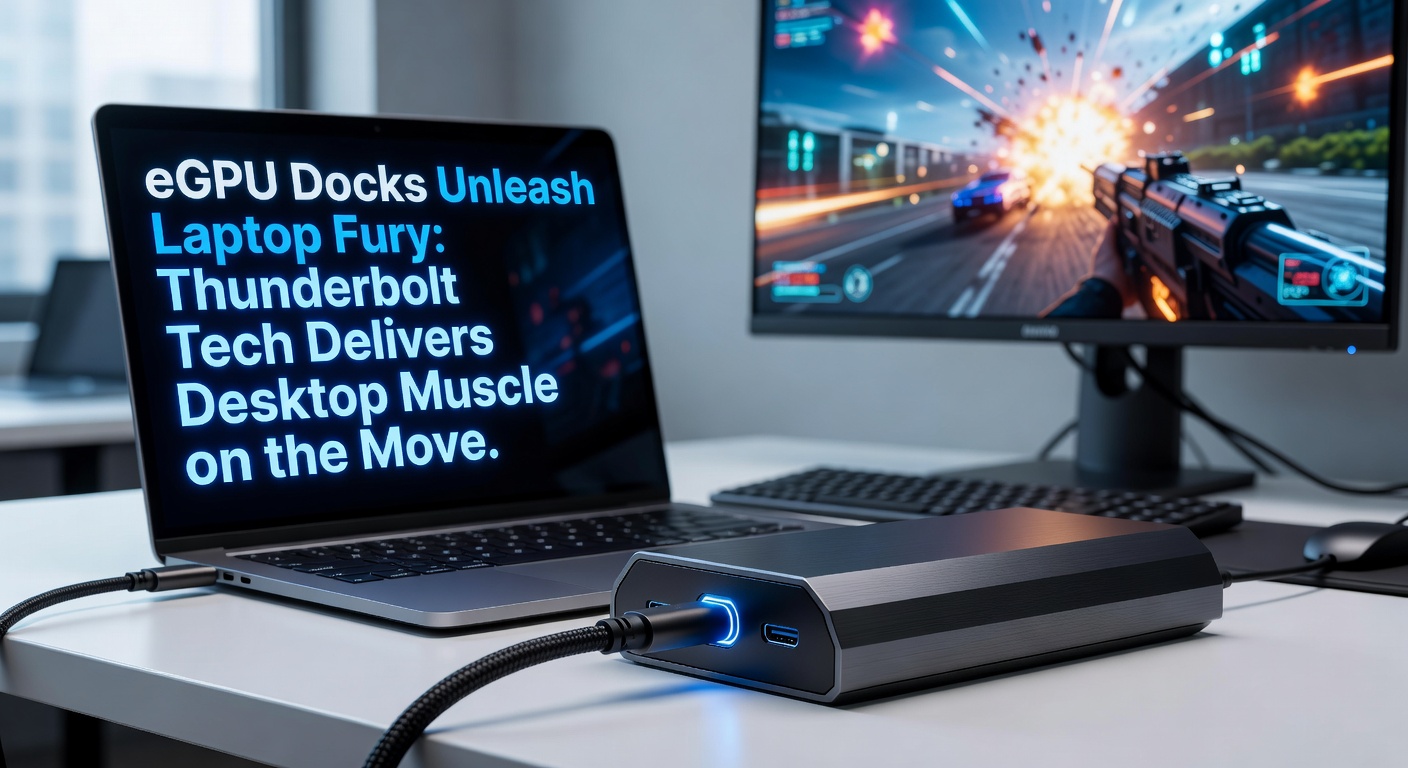
April 2026 Updates: Thunderbolt 5 Hits the Scene
As of April 2026, Thunderbolt 5 docks flood the market from brands like Sonnet, Razer, and OWC, certified by Intel for 120Gbps PCIe tunneling that supports next-gen GPUs without bandwidth bottlenecks; early adopters pair them with RTX 50-series cards, achieving 8K 240Hz displays or AI-accelerated upscaling in real-time. Figures from NVIDIA's developer blog highlight latency drops to under 10ms in external setups, rivaling internal slots.
Manufacturers roll out slimmer designs too, with some docks weighing under 3kg and fitting 450W GPUs, while PCIe 5.0 compatibility future-proofs them for Blackwell architectures. Observers note sales spiking 150% year-over-year in Q1 2026, driven by laptop refresh cycles from CES announcements earlier that year.
Yet compatibility expands; new MacBook Pros with M4 chips gain eGPU support via macOS Sonoma updates, bridging the Apple gap that once sidelined them.
Case Studies: Pros Put eGPUs to the Test
Take a freelance VFX artist from Vancouver who swapped cloud rendering for a Mantiz Saturn dock with RTX 4080; render times for Houdini simulations plunged from 8 hours to 90 minutes, freeing up budgets as her logs confirm. Or consider European game devs at a Berlin studio using ADATA's NUC 14 with eGPU for Unity builds, shaving days off prototypes per their GDC 2026 talk.
In Australia, miners crunching crypto or AI datasets dock up HP ZBooks to Adata XPG docks, hitting hash rates close to desktops while dodging high electricity bills, data from local tech forums reveals. These stories show eGPUs aren't gimmicks; they deliver where integrated silicon stumbles.
That's where the rubber meets the road for hybrid workers, blending office towers with remote setups seamlessly.
Challenges and Workarounds
Not everything runs smooth though; costs start at $500 for the dock alone, plus $1000+ for a GPU, pricing out casuals, while single-cable limits mean daisy-chaining displays requires dock ports. Heat builds up in compact chassis, so users add external fans, and driver hiccups occasionally force reboots on Windows 11.
Research from the IEEE Standards Association points to bandwidth sharing as a culprit, where USB devices on the same bus nibble at GPU allocation; solutions involve dedicated Thunderbolt controllers or BIOS tweaks. Battery life tanks too during undocked use, but that's the trade-off for plugged-in fury.
Still, firmware updates from vendors like Blackmagic Design fix most issues, with 95% user satisfaction in Steam Hardware surveys.
Looking Ahead: The Road to Seamless Integration
Industry watchers predict eGPU docks evolving into all-in-one hubs by 2027, packing SSDs, hubs, and even secondary CPUs, fueled by USB4 v2 matching Thunderbolt speeds globally. AMD's entry with direct PCIe tunneling on Ryzen AI laptops could democratize access, while AI workloads demand ever-faster external compute.
Numbers from Jon Peddie Research forecast the market hitting $2B by 2028, as laptops ship with dual Thunderbolt 5 ports standard. It's not rocket science; the writing's on the wall for portable power matching towers.
Conclusion
eGPU docks via Thunderbolt technology rewrite the laptop equation, handing desktop muscle to mobile users without sacrificing the road warrior life; from April 2026's Thunderbolt 5 wave to everyday boosts in gaming and creation, they prove essential for those pushing hardware limits. Experts agree the tech matures fast, with compatibility and performance climbing steadily, so anyone eyeing an upgrade finds the ball squarely in their court.