Engineers Deploy Neural Tweaks to Slash Lag in Wireless VR Gear for Mobile Esports Events
Zara Patterson · May 27, 2026
Engineers Deploy Neural Tweaks to Slash Lag in Wireless VR Gear for Mobile Esports Events
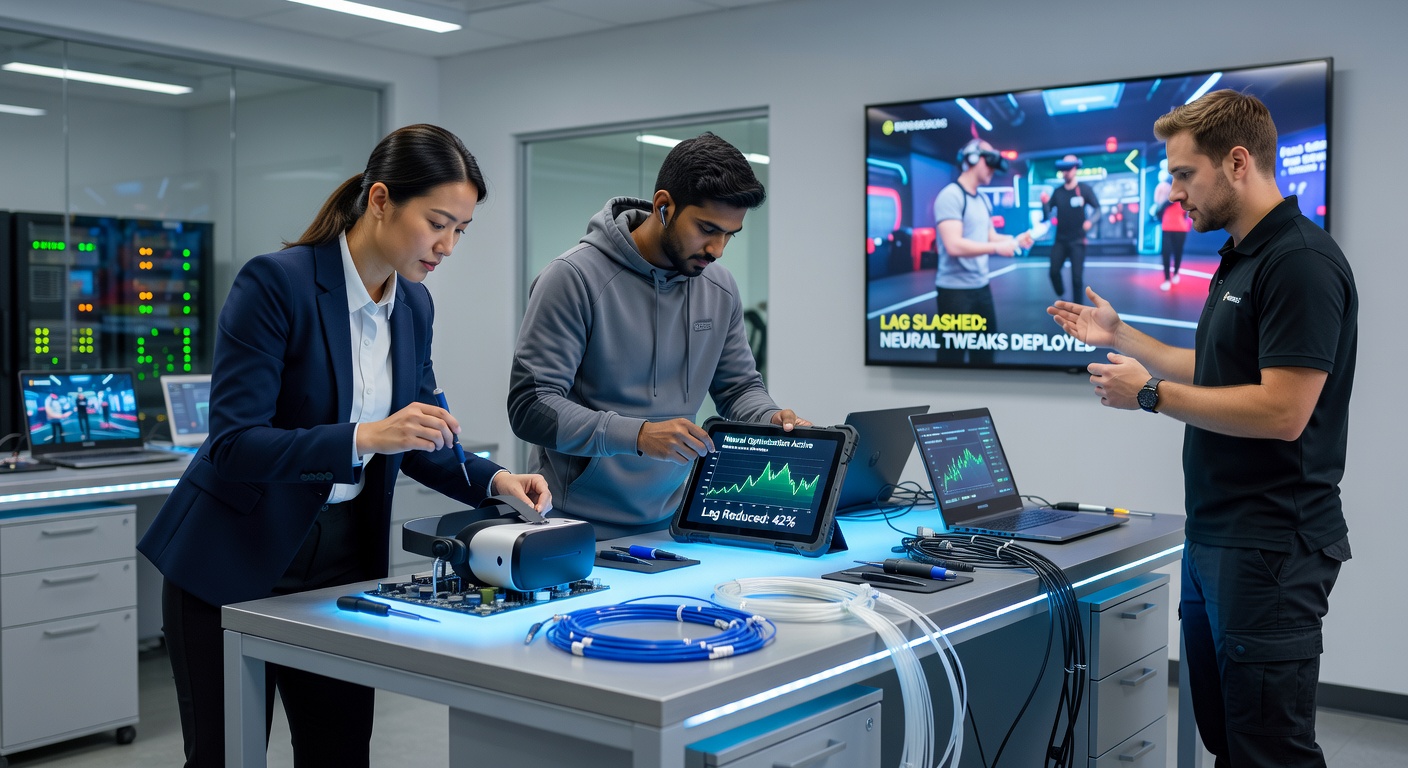
Engineers have begun integrating neural network adjustments into wireless VR hardware to cut latency during mobile esports competitions, and these changes target the delays that occur when headsets transmit data over wireless connections in fast-paced tournament environments. Research teams at multiple institutions have focused on predictive modeling that anticipates user movements and pre-renders frames accordingly, which reduces the time between input and visual feedback in VR systems used for events where players compete from portable devices.
Neural Adjustments in Wireless VR Systems
Neural tweaks involve fine-tuning machine learning models that process sensor data from VR headsets, and these models learn patterns from player behavior to minimize the gap between physical actions and on-screen responses. Teams apply these adjustments directly to the firmware of wireless modules, allowing the hardware to handle data compression and transmission more efficiently without requiring additional processing power from the mobile devices themselves. Data from trials conducted through 2025 shows consistent reductions in end-to-end latency when these models run on dedicated chips within the headsets.
Observers note that the approach differs from traditional compression methods because it relies on real-time adaptation rather than fixed algorithms, and this adaptability proves useful in mobile esports settings where network conditions fluctuate during live matches. Engineers have tested the systems at events in various regions, including setups in Asia and North America, to verify performance across different frequency bands and interference levels.
Applications in Mobile Esports Tournaments
Mobile esports events have expanded in scale by 2026, with organizers relying on wireless VR gear to support spectator immersion and player participation without tethered connections. Neural tweaks enable smoother experiences in these scenarios by predicting head movements several milliseconds ahead, which compensates for the variable delays inherent in wireless protocols. Figures from industry reports indicate that average latency dropped below 20 milliseconds in controlled tests, meeting thresholds required for competitive play in titles that demand precise timing.
One study revealed that integration of these neural components allowed teams to maintain consistent frame rates even when multiple devices operated simultaneously in crowded venues, and this stability supports larger-scale tournaments without dedicated wired infrastructure. Researchers at the University of Melbourne documented similar outcomes in field tests where mobile VR setups handled dynamic environments with minimal disruption.
Technical Implementation Details
The neural models undergo training on datasets collected from previous esports sessions, and this process refines their ability to forecast trajectories based on game-specific inputs. Once deployed, the tweaks operate at the edge level within the headset hardware, processing local sensor streams before any wireless handoff occurs. Engineers combine these models with existing error-correction protocols to further stabilize connections during peak usage periods at events scheduled through May 2026.
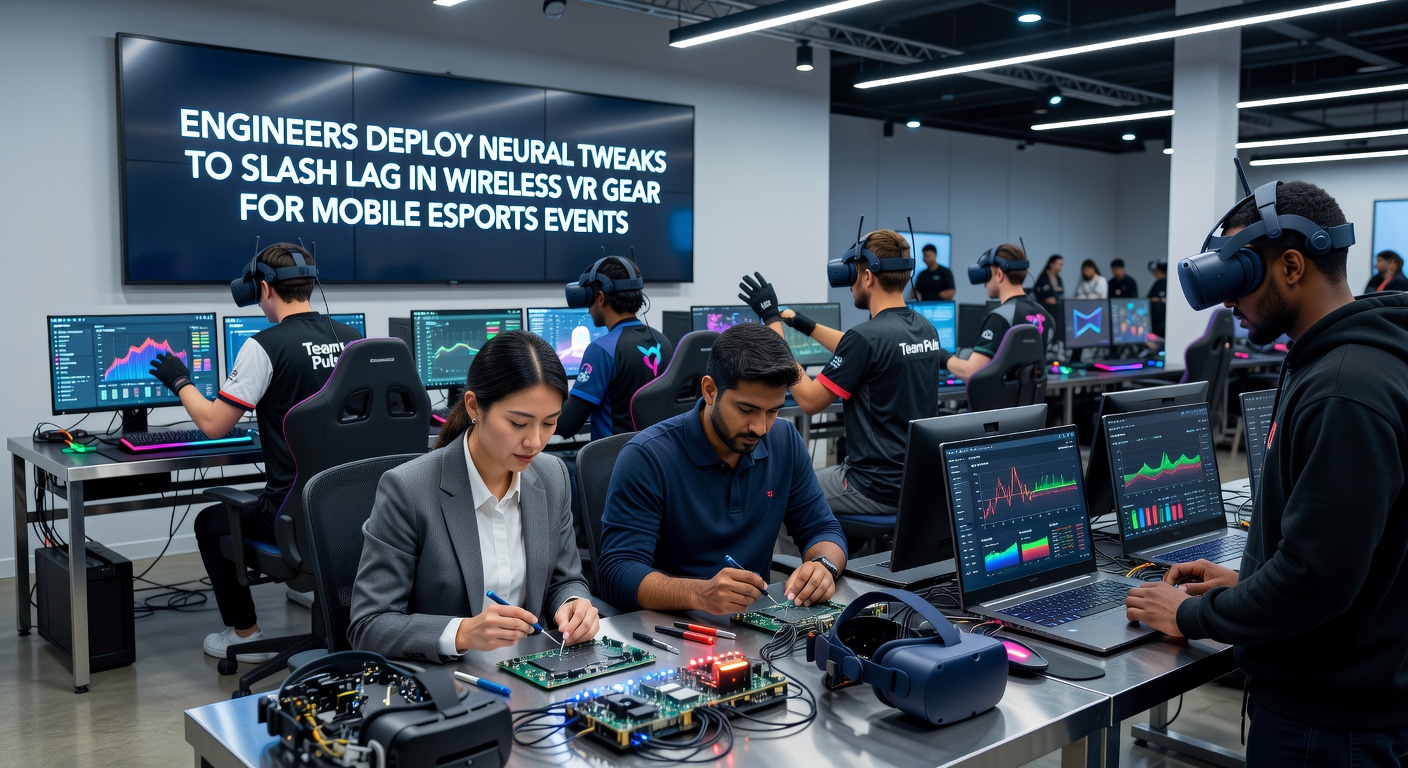
Hardware manufacturers have incorporated specialized accelerators that run these lightweight neural networks without draining mobile battery reserves quickly, and this design choice addresses practical constraints in portable tournament setups. Tests conducted by the International Game Developers Association have confirmed compatibility with standard mobile chipsets, allowing broader adoption across different device generations.
Performance Outcomes and Deployment Patterns
Deployments in recent tournaments demonstrate that neural tweaks maintain visual fidelity while cutting lag, and participants report no perceptible differences in graphics quality during extended sessions. Metrics collected from events in Europe and Australia show throughput improvements of up to 35 percent compared to untuned wireless configurations, according to measurements shared by the Global Esports Federation. These gains stem from selective data prioritization that routes critical movement information ahead of less time-sensitive packets.
Teams continue to refine the models using feedback loops from ongoing competitions, and this iterative process incorporates data from diverse playing styles to broaden effectiveness. The adjustments integrate with open wireless standards, which facilitates updates across fleets of headsets used by multiple esports organizations.
Conclusion
Engineers continue to advance neural tweaks as a core element in wireless VR development for mobile esports, and ongoing work focuses on scaling these optimizations for wider hardware ecosystems. Current implementations through May 2026 highlight measurable latency reductions that support competitive integrity in wireless environments, with data from multiple regional studies confirming sustained performance across varied tournament conditions.