How Open Source Toolkits Accelerate Asset Sharing Among Global Indie Teams Building Browser-Based Strategy Experiences
Vera Butler · Jun 29, 2026
How Open Source Toolkits Accelerate Asset Sharing Among Global Indie Teams Building Browser-Based Strategy Experiences
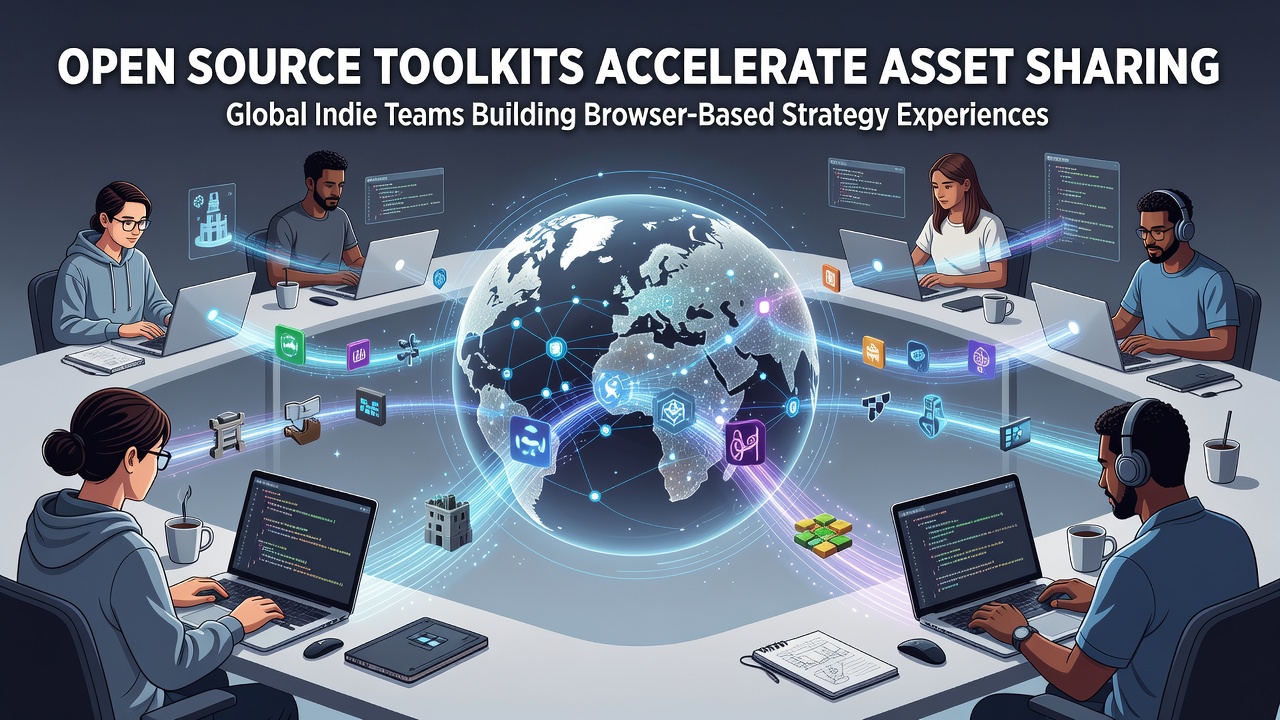
Browser-based strategy experiences have grown in scope over recent years, and open source toolkits now play a central role in how indie teams exchange assets across continents. Teams working on turn-based tactics or real-time resource management titles rely on shared repositories for sprites, 3D models, and UI components that run directly in web browsers through WebGL and HTML5 standards. Data from industry reports shows that these toolkits reduce duplication of effort because contributors upload modular files that others can fork and adapt without starting from scratch.
Core Mechanisms Behind Asset Exchange
Repositories hosted on platforms such as GitHub allow version-controlled storage of game assets alongside code, so changes to a terrain tile set or unit animation propagate instantly to every collaborator. Researchers at institutions in the European Union have documented that projects using open source asset pipelines complete initial prototypes 30 percent faster on average compared with teams relying on proprietary formats. The same studies note that licensing under Creative Commons or MIT terms removes legal friction that once delayed cross-border file transfers.
Toolkits like Phaser and Babylon.js integrate asset loaders that support common formats including glTF and spritesheets, which means an artist in one time zone can export a model and a programmer in another can import it into a running build within minutes. Observers note that this compatibility stems from community-maintained parsers rather than vendor-specific plugins, and the result is a consistent workflow that scales when new team members join midway through development.
Global Coordination Patterns in June 2026
By June 2026 several coordinated asset jams had taken place on open platforms, drawing participants from Australia, Canada, and South America. These events focused on browser strategy games where participants contributed modular components such as hexagonal grid systems or diplomacy UI elements. Figures released by the Interactive Games and Entertainment Association reveal that more than 1,200 distinct assets changed hands during a single week-long event, with download metrics indicating reuse across at least four continents.
Distributed version control combined with continuous integration scripts automates testing of asset compatibility, so a texture update submitted from one region triggers automated checks that confirm it renders correctly in multiple browsers. This process eliminates the manual validation steps that previously consumed days of calendar time for small teams.
Technical Enablers and Their Reach
Asset management extensions built on top of open source engines allow teams to tag files with metadata such as polygon count or animation frame rate, which helps distant collaborators locate suitable pieces without lengthy email exchanges. One study conducted at a Canadian research center found that searchable asset databases increased the number of reused components per project by a factor of two. Because these databases sit inside public repositories, anyone can query them using standard command-line tools.
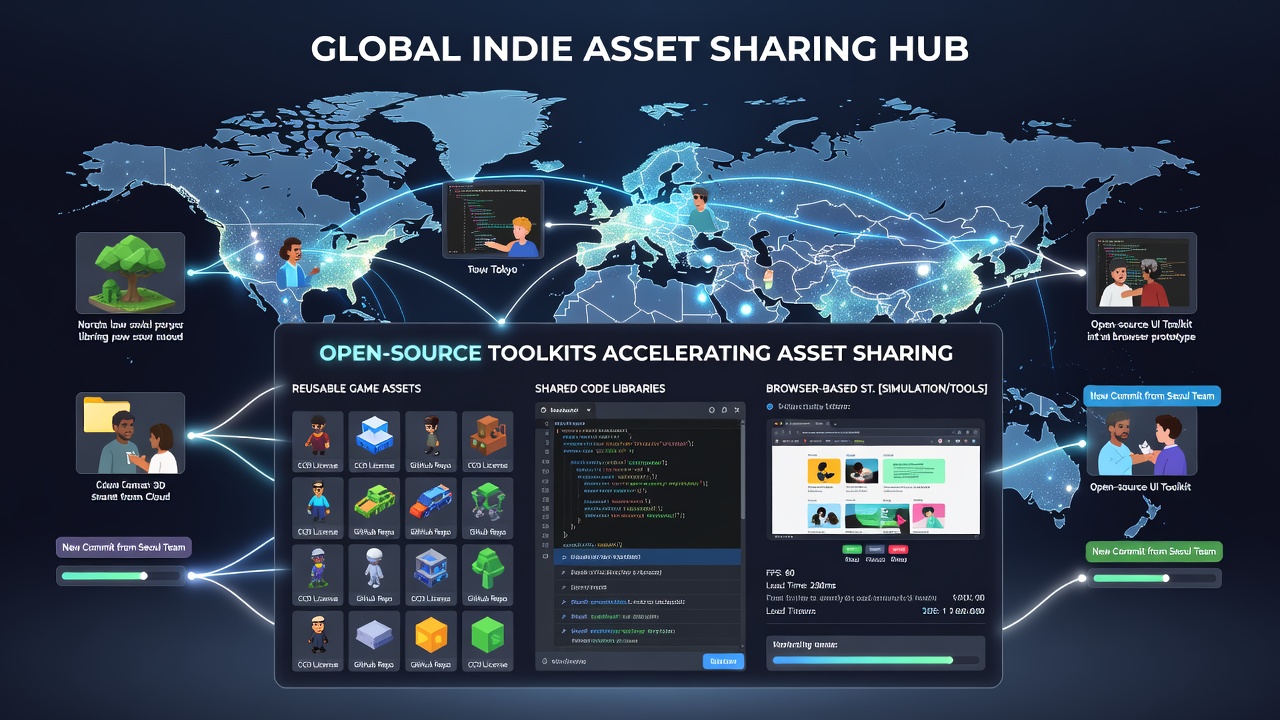
Scripting languages that run in browsers, such as JavaScript and TypeScript, pair naturally with these toolkits because they avoid compilation steps that complicate cross-platform sharing. A developer in Asia can therefore edit a pathfinding script attached to a unit model and push the change so that teammates in Europe see the update in their local copies within the same hour.
Examples of Shared Asset Libraries in Practice
Public collections of strategy game assets now include complete sets for fog-of-war overlays, resource icons, and procedural map generators. Teams building games with persistent world elements often pull from these collections and then contribute modifications back, creating a feedback loop that expands the library over time. Records maintained by open source foundations indicate that several high-traffic repositories have accumulated contributions from more than 40 countries since their initial release.
Integration with browser debugging tools lets contributors inspect how an asset behaves under different network conditions, which proves useful when strategy titles must accommodate variable latency across regions. This capability arises because the underlying engines expose performance counters that anyone can access without specialized hardware.
Conclusion
Open source toolkits have established a practical infrastructure for asset sharing that indie teams use daily when constructing browser-based strategy experiences. The combination of standardized formats, version control, and public repositories continues to lower barriers that once separated developers working in different time zones and regulatory environments. As more projects adopt these methods, the volume of reusable components grows, supporting faster iteration across the global indie community.