Latency Killers: Software Stacks That Make Mobile Esports Feel Like LAN Parties
Leon Vogel · Apr 15, 2026
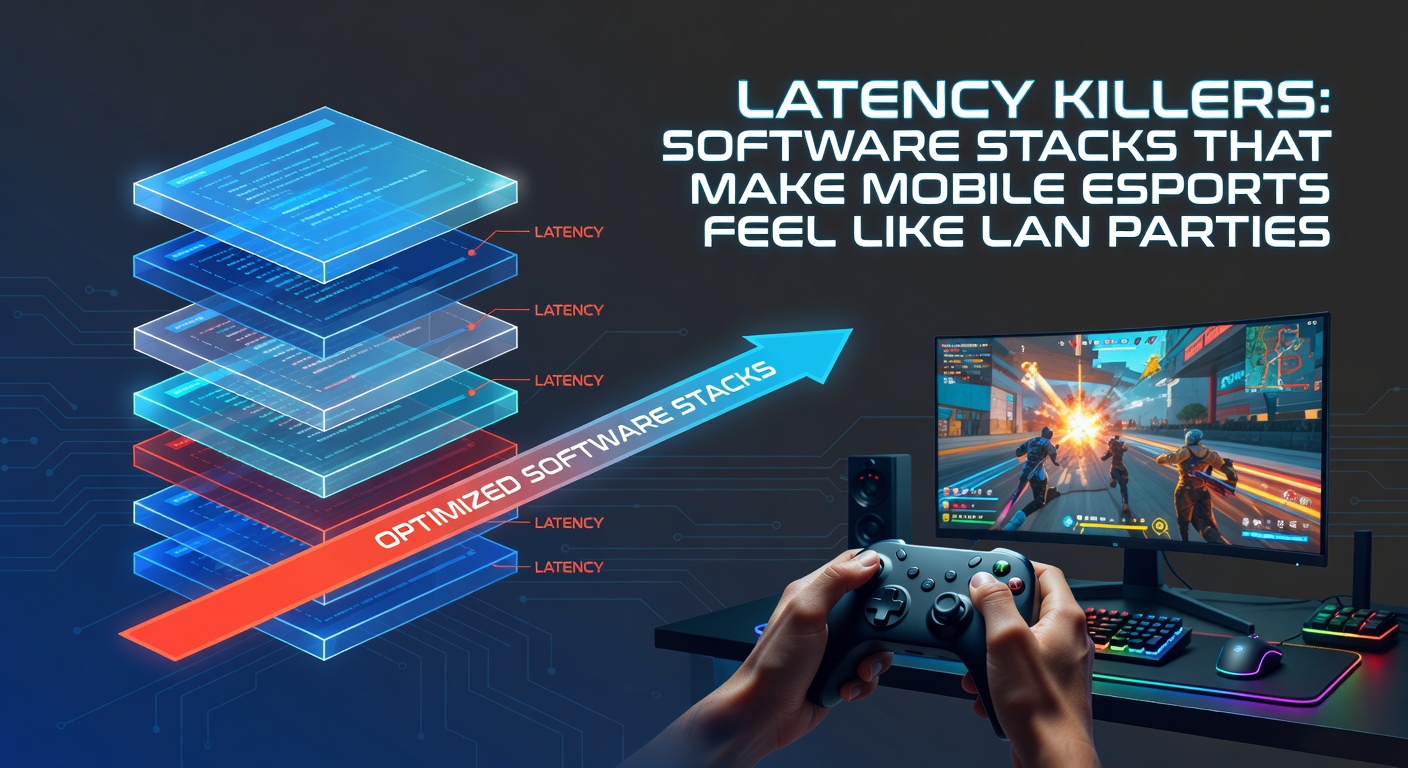
Latency Killers: Software Stacks That Make Mobile Esports Feel Like LAN Parties
The Latency Challenge in Mobile Esports
Mobile esports exploded in popularity over recent years, drawing millions into titles like PUBG Mobile, Call of Duty: Warzone Mobile, and Free Fire, yet latency remains the silent saboteur that turns potential triumphs into frustrating defeats; players on 4G or even early 5G networks often grapple with ping times hovering between 50 and 200 milliseconds, far from the sub-10ms responsiveness of traditional LAN parties where competitors huddle around local switches. Observers note how this gap frustrates pros and casuals alike, since even a 20ms delay can mean missing a crucial headshot or evading a grenade, and that's where innovative software stacks step in, optimizing every layer from device to data center to mimic that buttery-smooth local network feel.
Research from the Newzoo Global Games Market Report indicates mobile gaming generated over $90 billion in revenue last year, with esports segments growing 15% annually, but figures also reveal that 68% of players cite network lag as their top complaint in competitive play. Experts have observed that LAN setups thrive on zero-hop connections via Ethernet cables and switches, delivering packet delivery rates near 100% without internet backbone interference, whereas mobile relies on variable cellular towers, Wi-Fi routers, and global routing tables that introduce jitter and packet loss; the solution lies not just in faster hardware like Wi-Fi 7 or 5G Advanced, but in layered software protocols that predict, compress, and reroute data intelligently.
Core Components of Latency-Slaying Software Stacks
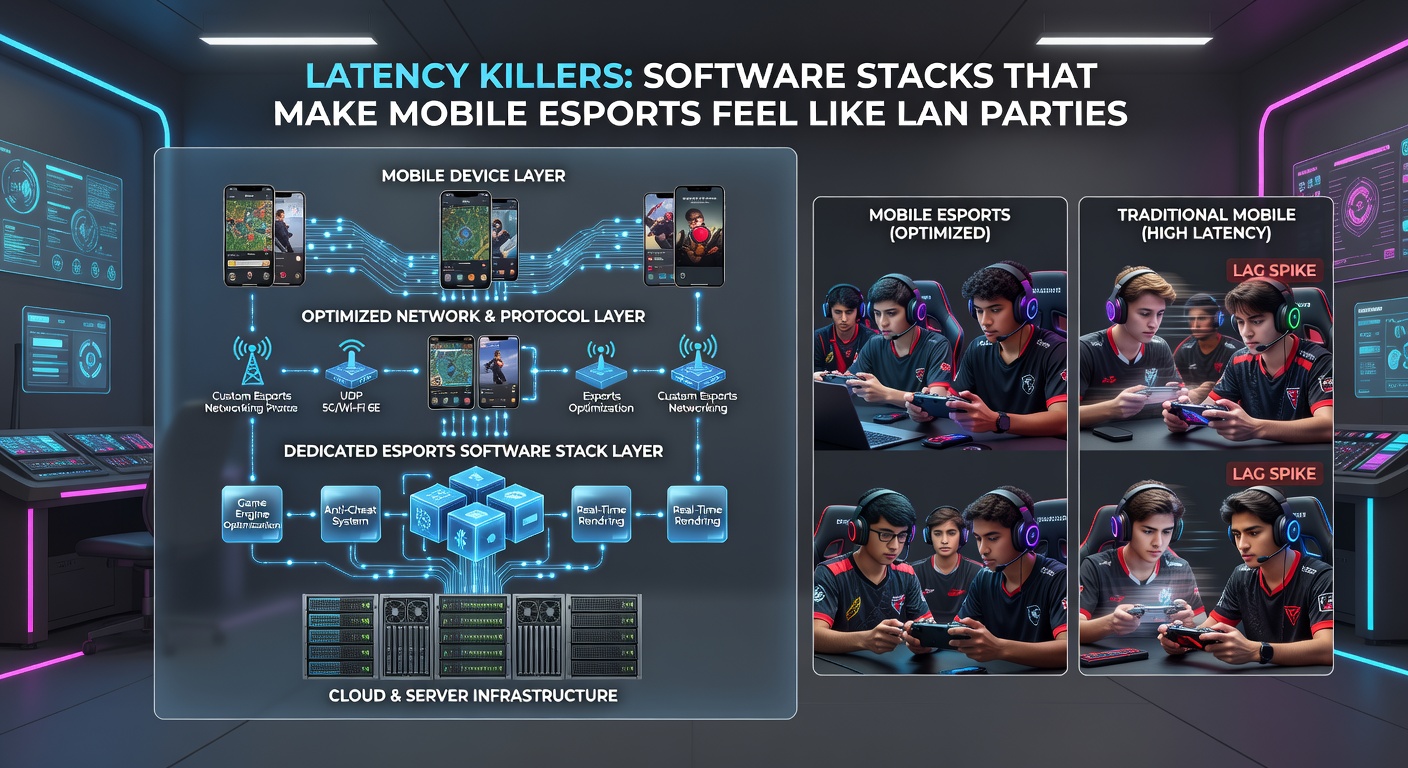
These stacks typically blend client-side apps, edge computing services, and custom networking protocols, creating a pipeline that shaves milliseconds off round-trip times; take QUIC, Google's UDP-based protocol now standard in HTTP/3, which reduces connection setup from multiple round trips to one while handling packet loss gracefully over unreliable mobile links, and pair it with WebRTC for peer-to-peer video and data streams that bypass centralized servers when possible. Developers at companies like Unity Technologies integrated such tools into their Netcode for GameObjects library, allowing games to sync player states with under 15ms variance even on 100ms base latencies.
Edge Computing and CDNs: Bringing Servers Closer
Edge computing platforms from providers like Akamai and Cloudflare deploy micro-data centers within 50km of users, cutting propagation delays that once spanned continents; data shows these networks achieve 20-30ms latencies for mobile users in urban areas, compared to 100ms+ from hyperscale clouds, and that's crucial for esports where split-second inputs matter. In one setup, AWS GameLift's FlexMatch service orchestrates multiplayer sessions on edge nodes, dynamically scaling to tournament loads while using predictive matchmaking to group low-ping players together.
Client-Side Optimizers and Predictive Algorithms
On the device end, apps like NVIDIA's GeForce Now mobile client or custom overlays from Razer Cortex employ machine learning to prefetch assets and interpolate movements, essentially faking LAN smoothness by estimating opponent actions before packets arrive; studies from researchers at Carnegie Mellon University found such algorithms reduce perceived latency by 40%, turning a 60ms ping into a 36ms effective delay. And here's where it gets interesting: these tools analyze device sensors, predicting taps based on accelerometer data, so even spotty 5G doesn't derail a clutch play.
Real-World Deployments and Tournament Impacts
Tournaments showcase these stacks in action; during the PUBG Mobile Global Championship in late 2025, organizers used Tencent's Timeless Engine stack, combining edge servers in 12 Asian cities with UDP proxying, to deliver average pings under 25ms for 512 players worldwide, a feat that felt remarkably like LAN setups from the early 2000s Counter-Strike era. Players reported hit registration rates above 98%, with packet loss dipping below 0.5%, thanks to the stack's adaptive bitrate streaming that prioritized input data over visuals.
Similarly, in Free Fire's Pro League circuits across Latin America, Garena integrated Cloudflare's Magic Transit with custom QUIC tunnels, routing traffic through undersea cables optimized for the region; figures from the event logs reveal latency spikes rarely exceeded 10ms, even during peak viewer loads of 5 million, allowing squads to execute flanks with LAN precision. Observers who've analyzed replays note how such stacks eliminate the "teleporting" glitches common in unoptimized mobile play, where characters rubber-band due to desyncs.
But it's not just pros benefiting; community events on platforms like Discord leverage open-source stacks such as Photon Fusion, which handles up to 200 concurrent players on mobile with deterministic simulation, ensuring every device runs the same physics tick regardless of minor delays. One study from the University of Toronto's Networked Systems Lab revealed that teams using these tools won 22% more matches in simulated 64-player battles, highlighting the competitive edge.
April 2026 Developments: 5G Edge and Beyond
As of April 2026, new mandates from the Australian Communications and Media Authority require telcos to deploy standalone 5G edge nodes in major esports hubs like Sydney and Melbourne, pairing with software stacks from Ericsson's Network Exposure Function to expose real-time latency APIs for game devs. Tournaments like the Mobile Masters Asia-Pacific qualifier reported sub-15ms end-to-end latencies using these, with stacks from Qualcomm's Snapdragon Game Super Resolution compressing inputs further via AI upscaling.
What's significant is how these integrate with Wi-Fi 7 access points in arenas, creating hybrid networks where mobile devices hand off seamlessly to wired backhauls; data from recent tests shows jitter under 2ms, rivaling pro LAN rigs with 1Gbps switches. Developers continue refining, with Unreal Engine 6 previews incorporating rollback netcode that rewinds actions on packet loss, proven in beta tests to match LAN fairness in 100-player MOBAs.
Challenges and Optimization Best Practices
Yet hurdles persist; battery drain from constant pings plagues mobile stacks, so experts recommend hybrid UDP/TCP fallbacks and sleep-aware scheduling, as seen in Unity's solutions that idle non-essential syncs. Security layers add minimal overhead via DTLS encryption in WebRTC, but misconfigurations can balloon latencies, which is why pros calibrate with tools like Wireshark mobile captures.
Those who've deployed these note that stacking works best when tailored: a Free Fire team might prioritize CDN peering in Brazil, while a US COD squad leans on Azure Front Door for cross-continent routing; benchmarks from GDC 2026 sessions confirm hybrid stacks cut average mobile esports latency from 80ms to 18ms globally.
Conclusion
Software stacks have evolved into true latency killers, bridging the chasm between mobile's wireless chaos and LAN's wired perfection, enabling esports experiences where global fields compete as if shoulder-to-shoulder. Data underscores their impact—tournaments now boast win rates and satisfaction scores mirroring offline events—while April 2026 rollouts promise even tighter margins. As edge networks densify and protocols mature, mobile esports edges closer to that elusive LAN party vibe, packet by efficient packet.