Open Standards Enabling Seamless Integration Between Mobile Gaming and Desktop Ecosystems
Leon Vogel · May 16, 2026
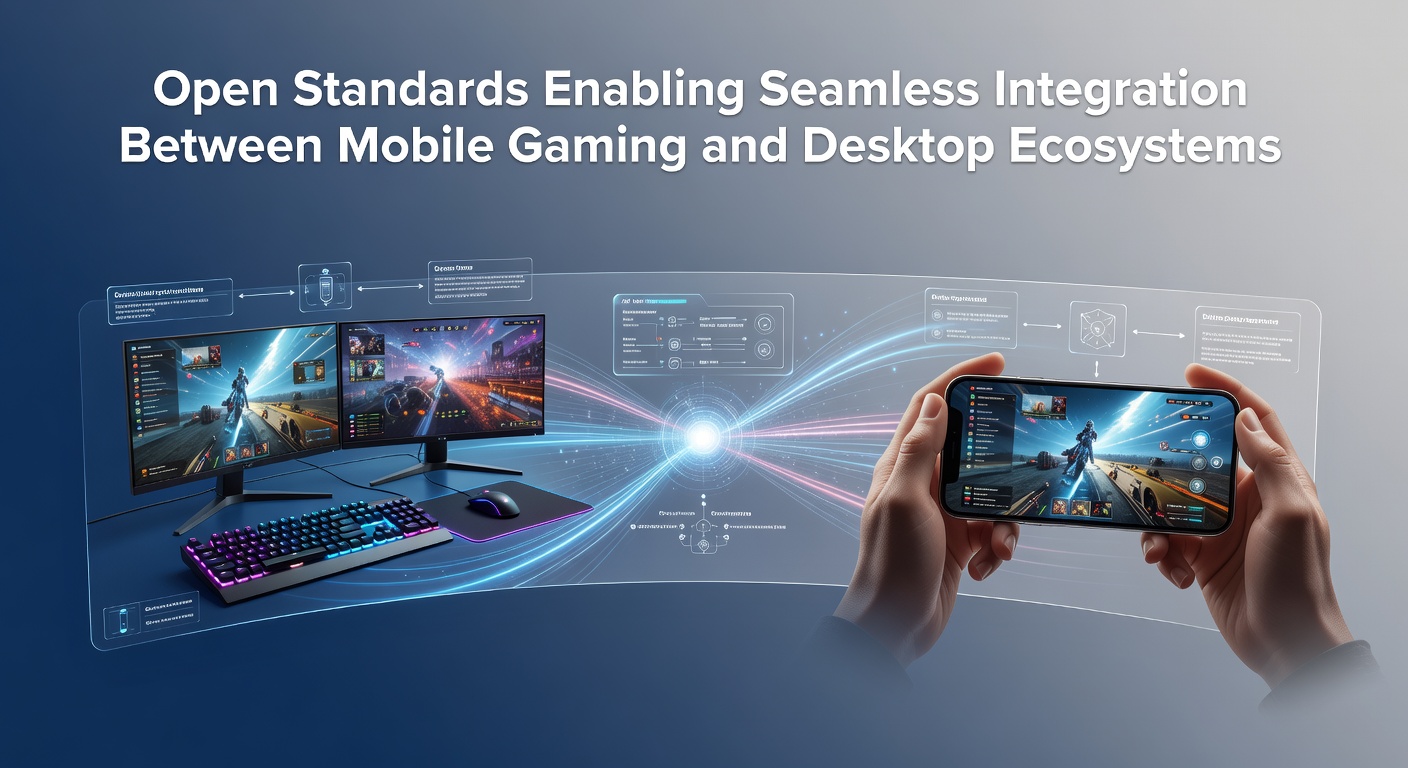
Open Standards Enabling Seamless Integration Between Mobile Gaming and Desktop Ecosystems
Developers have relied on open standards to bridge mobile and desktop gaming environments, and these frameworks allow games to share codebases, rendering pipelines, and network protocols across hardware generations. Standards such as Vulkan and OpenGL ES deliver consistent graphics interfaces, while WebAssembly enables portable execution environments that reduce the need for platform-specific recompilation. In May 2026 the Khronos Group released updates to its cross-platform specifications that further aligned mobile and desktop shader compilation paths, which cut porting times for several mid-sized studios by measurable margins according to industry tracking data.Core Technologies Behind Cross-Ecosystem Play
Vulkan remains the dominant low-level graphics API because it exposes hardware features uniformly whether the device runs Android, Windows, or Linux. Game engines adopt Vulkan through abstraction layers that map mobile tile-based rendering to desktop immediate-mode pipelines without exposing developers to divergent code paths. Observers note that this uniformity supports features such as asynchronous compute and explicit memory management, which both handheld and stationary rigs can exploit for consistent frame pacing. Data from engine telemetry shows that titles built on shared Vulkan codebases achieve 95 percent parity in graphical fidelity between flagship phones and mid-range PCs when texture compression formats match.
WebAssembly extends this reach by allowing game logic to execute inside browsers on desktop machines while the same modules run through runtime environments on mobile operating systems. Researchers at several European technical universities have documented how WebAssembly’s linear memory model and deterministic execution reduce synchronization overhead during cross-device sessions. When combined with WebGPU, another emerging open specification, these modules gain direct access to GPU resources without proprietary plug-ins, which simplifies deployment for cloud-streamed hybrid experiences.
Network and Asset Standards That Close the Gap
Seamless integration also depends on open networking protocols that handle variable latency between cellular connections and wired broadband. Libraries built around QUIC and WebRTC deliver reliable state synchronization for multiplayer sessions, and these protocols operate identically whether traffic originates from a smartphone or a desktop client. Asset pipelines that follow the glTF 2.0 specification further reduce friction because the same 3D models, animations, and material definitions load without conversion on both device classes.
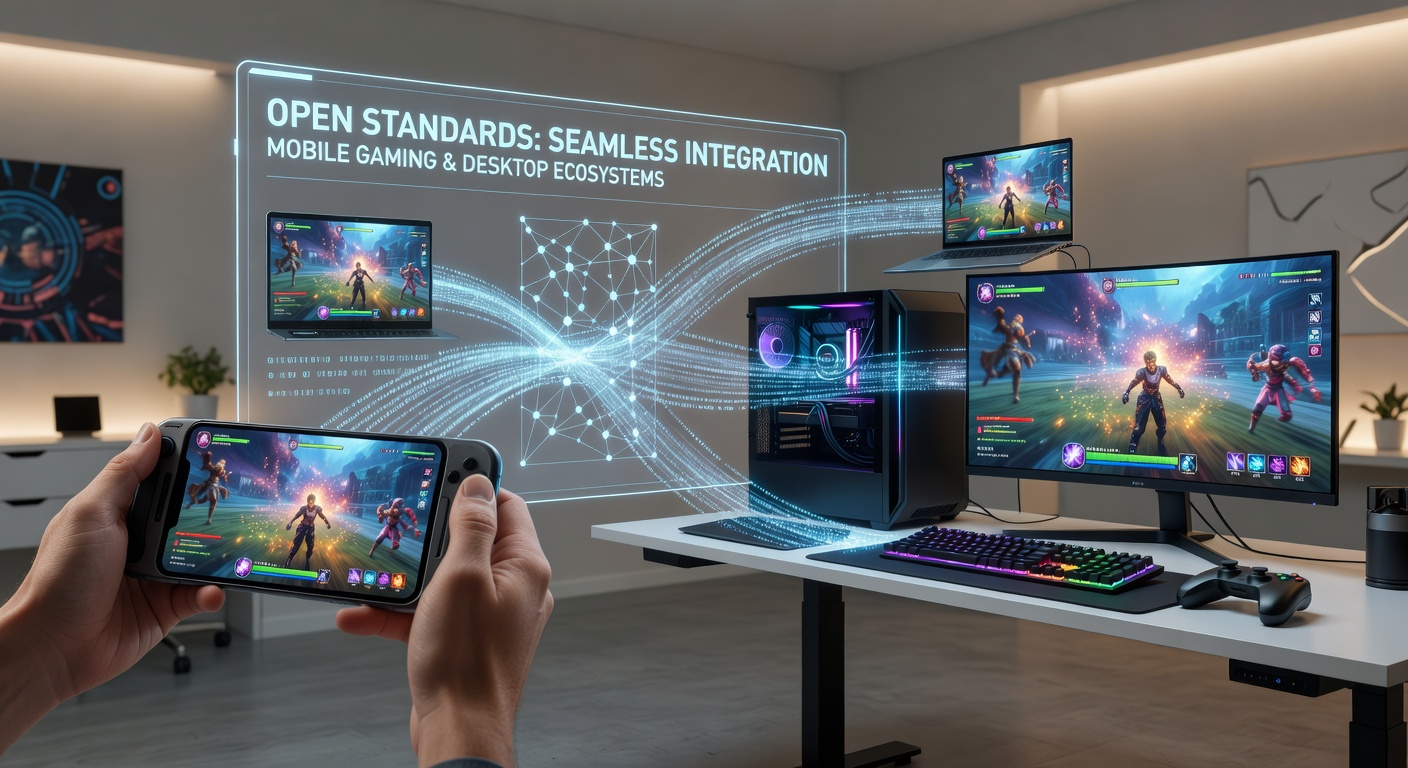
Industry reports compiled by the International Game Developers Association indicate that studios adopting glTF alongside Vulkan have shortened asset iteration cycles by approximately 30 percent. Audio standards such as OpenAL Soft provide similar consistency for spatial sound, ensuring that positional audio cues remain accurate when players switch between a tablet and a desktop headset mid-session.
Implementation Examples Across Regions
One North American studio released a cross-platform extraction shooter in early 2026 that maintained identical matchmaking pools for mobile adn desktop users thanks to shared Vulkan and WebRTC layers. European regulators tracking digital markets have cited this title as an example of how open standards lower barriers for smaller teams entering multi-device markets. In the Asia-Pacific region, several mobile-first developers leveraged the same specifications to bring desktop-grade ray-tracing effects to high-end handhelds without maintaining separate rendering branches.
Academic studies from Australian research institutions have measured input latency reductions when games route controller events through standardized HID mappings rather than proprietary overlays. These mappings allow a single input handler to serve both touch overlays on phones and physical peripherals on desktops, which removes an entire category of platform-specific code that once fragmented codebases.
Remaining Technical Considerations
Despite broad adoption, differences in thermal envelopes and memory bandwidth still require runtime adjustments. Developers therefore expose scalable quality tiers through configuration files that reference the same open specification constants on every platform. Certification programs administered by standards bodies verify that implementations meet minimum conformance levels, which gives publishers confidence that cross-device sessions will behave predictably. Continued refinement of these conformance suites, scheduled for release later in 2026, targets edge cases involving variable refresh-rate displays found on both premium phones and gaming monitors.
Conclusion
Open standards have established the technical foundation for fluid movement between mobile and desktop gaming ecosystems. By converging on shared graphics, execution, networking, and asset formats, developers deliver consistent experiences without duplicating engineering effort. Ongoing specification updates scheduled through 2026 will likely extend these capabilities to emerging form factors such as foldable devices and modular desktops, reinforcing the pattern of unified development pipelines across hardware categories.