Player-Driven Narrative Tools Integrate Smartphone Feedback Directly into PC Development Sprints
Zara Patterson · Jun 17, 2026

Player-Driven Narrative Tools Integrate Smartphone Feedback Directly into PC Development Sprints
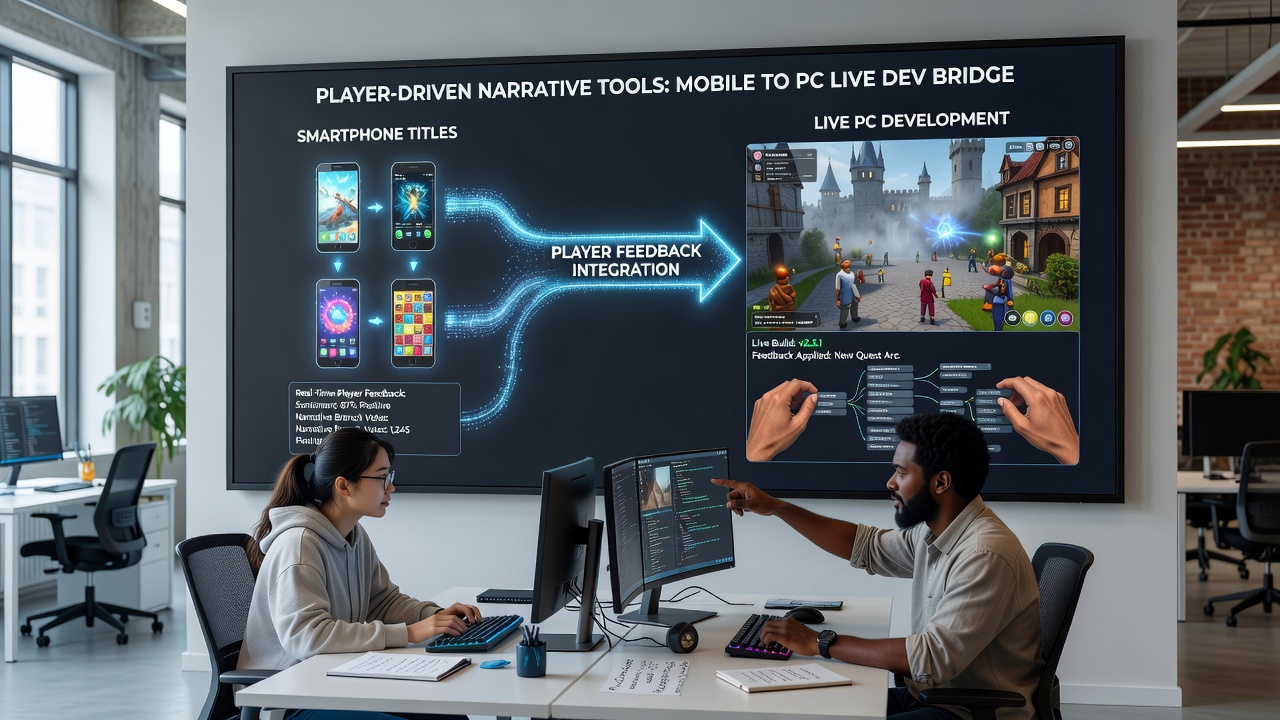
Player-driven narrative tools now pull direct input from smartphone game sessions and route it into active PC development cycles at studios with fifty to two hundred staff members, and these systems track dialogue choices, quest completions along with branching outcomes reported through mobile clients before mapping the patterns onto PC build timelines. Mid-sized teams began adopting unified feedback pipelines in early 2025, and by June 2026 several European and North American studios reported synchronized update cadences where mobile data refreshed PC sprint backlogs every forty-eight hours.
Data Pipelines Connecting Mobile Sessions to Desktop Builds
These pipelines collect anonymized player selections from smartphone titles through lightweight SDK hooks that log narrative decisions without storing personal identifiers, then forward aggregated metrics to version-control hooks inside PC engines. Developers configure rule sets that flag high-frequency choice clusters, such as repeated selection of morally ambiguous dialogue options, and the same clusters surface as tagged tasks inside sprint boards used by writers and designers working on desktop versions. Observers note that the handoff occurs through REST endpoints authenticated against studio identity providers, which keeps latency under three seconds for most data bursts during peak evening play periods.
Implementation Patterns Observed Across Multiple Studios
One Canadian studio integrated a narrative bridge layer into its existing Jira instance so that mobile quest-completion heat maps automatically generated subtasks assigned to narrative designers every Monday morning. Another team operating out of the Netherlands configured similar routing through their internal GitLab instance, allowing writers to review player-selected story variants from the mobile release candidate while simultaneously editing corresponding PC quest scripts. Both approaches rely on the same core mechanism: a lightweight translation layer converts mobile telemetry schemas into the structured data formats already consumed by desktop build tools.
Research conducted by the Entertainment Software Association in 2025 indicated that mid-sized studios using these bridges reduced narrative revision cycles by an average of eighteen percent compared with studios relying solely on internal playtest groups. The same report highlighted that teams in Australia and the United Kingdom achieved comparable reductions after standardizing their data schemas across mobile and PC codebases.
Technical Considerations During Live Sprints
Engineers maintain separate data-validation stages so that only statistically significant patterns, typically those appearing in at least twelve percent of mobile sessions over a rolling seven-day window, trigger new tasks inside PC sprints. This threshold prevents low-frequency outliers from disrupting planned deliverables while still allowing rapid incorporation of popular narrative directions. Studios also schedule weekly alignment meetings where producers review the automated task queue and manually promote or demote items based on scope constraints already captured in the sprint forecast.
Security teams enforce encryption on all telemetry streams and apply differential privacy techniques before any data reaches the development environment, satisfying requirements outlined in both the EU Digital Services Act guidelines and Canadian privacy regulations. These measures allow narrative tools to operate continuously without creating additional compliance overhead during active development windows.
Case Examples from Mid-Sized Development Teams
A studio in Seattle working on a cross-platform action RPG began routing smartphone dialogue selections into its PC narrative backlog in March 2026, and within eight weeks the writers had incorporated three new branching paths that mirrored the most common mobile player choices. A separate team in Melbourne applied the same workflow to an episodic adventure title, where mobile feedback on puzzle-solution ordering directly influenced the sequence of PC level introductions scheduled for the next major content drop.
Both examples illustrate how the bridge functions as a one-way data conduit during live sprints: mobile sessions supply raw preference signals while PC teams retain full editorial control over final implementation decisions.
Future Integration Pathways
Industry groups such as the International Game Developers Association have begun publishing reference architectures that standardize the translation layer between mobile telemetry and desktop agile tooling. Academic researchers at several universities continue to examine how these real-time feedback loops affect narrative coherence across platform releases, with preliminary findings scheduled for presentation at the 2027 Game Developers Conference.
Conclusion
Player-driven narrative tools now form a documented component of development practice at multiple mid-sized studios, routing smartphone-derived choice data into PC sprint planning through standardized pipelines and validation thresholds. Continued refinement of privacy controls alongside schema alignment efforts supports broader adoption while preserving editorial oversight on final narrative content.