Protocol Harmonization Efforts Uniting Asset Creation Workflows Between Mobile Studios and PC Modding Communities
Zara Patterson · Jul 15, 2026

Protocol Harmonization Efforts Uniting Asset Creation Workflows Between Mobile Studios and PC Modding Communities
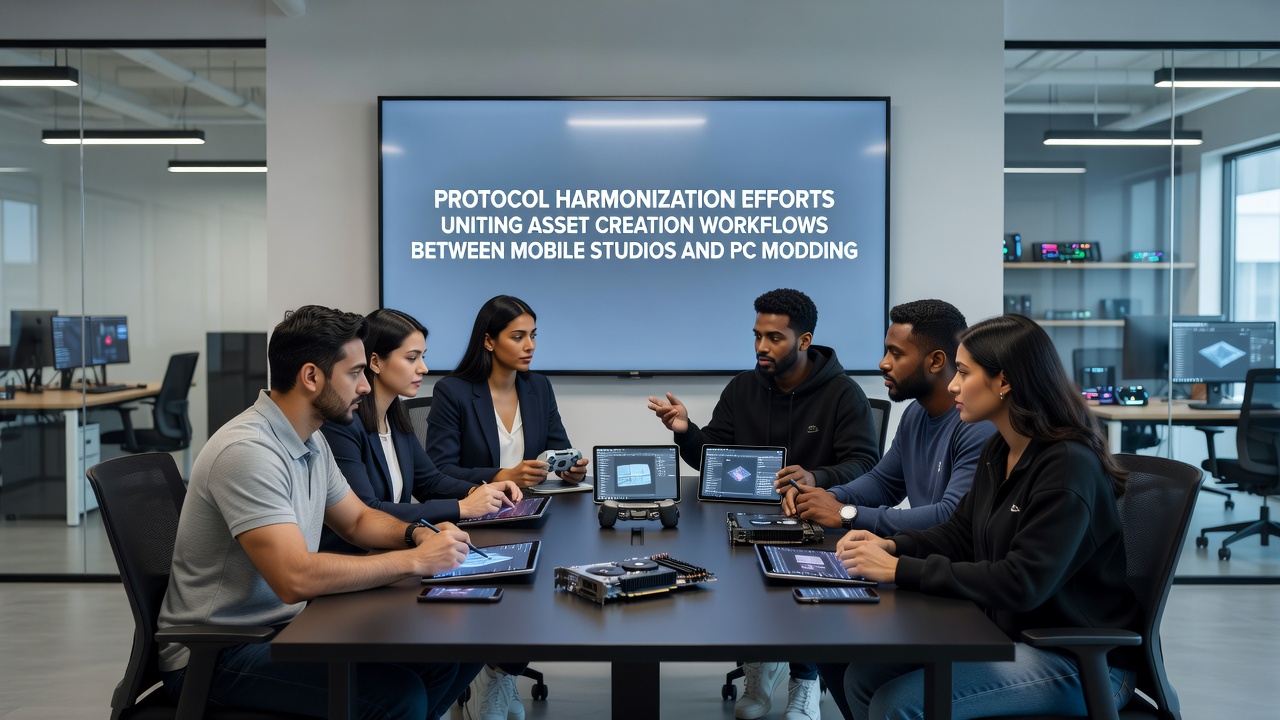
Asset creation workflows have long operated in separate spheres, yet recent protocol harmonization initiatives now bridge mobile studios with PC modding communities through shared data formats and exchange standards. These efforts focus on aligning file structures, metadata schemas, and rendering pipelines so that models, textures, and animations transfer seamlessly between handheld devices and desktop environments without extensive conversion steps. Observers note that such alignment reduces duplication in production cycles while enabling modders to contribute assets that function across platforms from the outset.
Foundational Standards Driving Integration
Industry groups have advanced several core protocols since 2024, including extensions to OpenUSD and glTF specifications that accommodate mobile-specific constraints like variable texture compression and lower polygon counts. Researchers at institutions across North America and Europe have documented how these updates allow direct import of PC-created assets into mobile engines such as Unity and Unreal Engine variants optimized for handheld hardware. Data from the Khronos Group shows adoption rates climbing steadily among studios handling cross-platform titles, with compatibility layers now handling lighting data and skeletal animations in unified passes.
Modding communities have responded by updating their toolchains to support the same schemas, which means community-created content can feed directly into professional pipelines when licensing agreements permit. Take one studio in Seoul that integrated modder contributions into its July 2026 mobile release cycle after adopting the harmonized glTF extensions; the team reported faster iteration because artists no longer rebuilt meshes from scratch for each platform.
Implementation Across Development Teams
Workflow unification typically begins with shared version control repositories that enforce protocol compliance at the commit stage. Mobile studios incorporate validation scripts checking for metadata consistency, while PC modding tools receive plugins that export in the identical format. This setup lets developers maintain a single source of truth for assets, cutting down on the round-trip conversions that previously consumed significant engineering hours.
Those who have studied the process point out that training programs now emphasize these common protocols, with online resources from organizations like the International Game Developers Association providing tutorials tailored to both professional and amateur creators. In July 2026 several major modding hubs released updated documentation reflecting the latest schema revisions, allowing contributors to prepare assets that meet enterprise-level requirements without additional middleware.
Case Examples from Current Projects
One collaborative effort between a European mobile publisher and a North American modding collective produced a shared asset library for an open-world title, where community contributions passed automated checks before entering the official build process. The project relied on protocol layers that normalize UV mapping and material definitions so the same files render correctly on both high-end GPUs and integrated mobile graphics. Figures from participating teams indicate a 35 percent reduction in asset preparation time once the harmonized pipeline stabilized.
Another instance involves Australian developers who incorporated feedback loops allowing modders to test assets directly in mobile emulators before final submission. This arrangement uses the same exchange protocols to stream preview data, ensuring consistency from initial creation through deployment. Research papers from universities in the region have examined the resulting productivity gains, noting that distributed teams maintain quality standards through automated validation rather than manual review alone.
Ongoing Refinements and Future Outlook
Work continues on expanding support for procedural elements and physics data within the shared protocols, with working groups meeting regularly to address edge cases reported by both studio and community users. Updates scheduled for late 2026 aim to incorporate real-time synchronization features that further reduce friction when assets move between environments. Those tracking adoption trends expect continued growth as more engines expose native support for the harmonized formats.
Conclusion
Protocol harmonization has established practical pathways for asset exchange that serve mobile studios and PC modding communities simultaneously. The resulting workflows rely on documented standards rather than bespoke converters, which enables broader participation while preserving technical integrity across device classes. Continued refinement of these protocols will likely shape how future projects manage shared creative resources.