Sensor Calibration Routines Power Precise Input Mapping in Portable Controllers for Strategy Games Under Varying Conditions
Zara Patterson · Jun 20, 2026
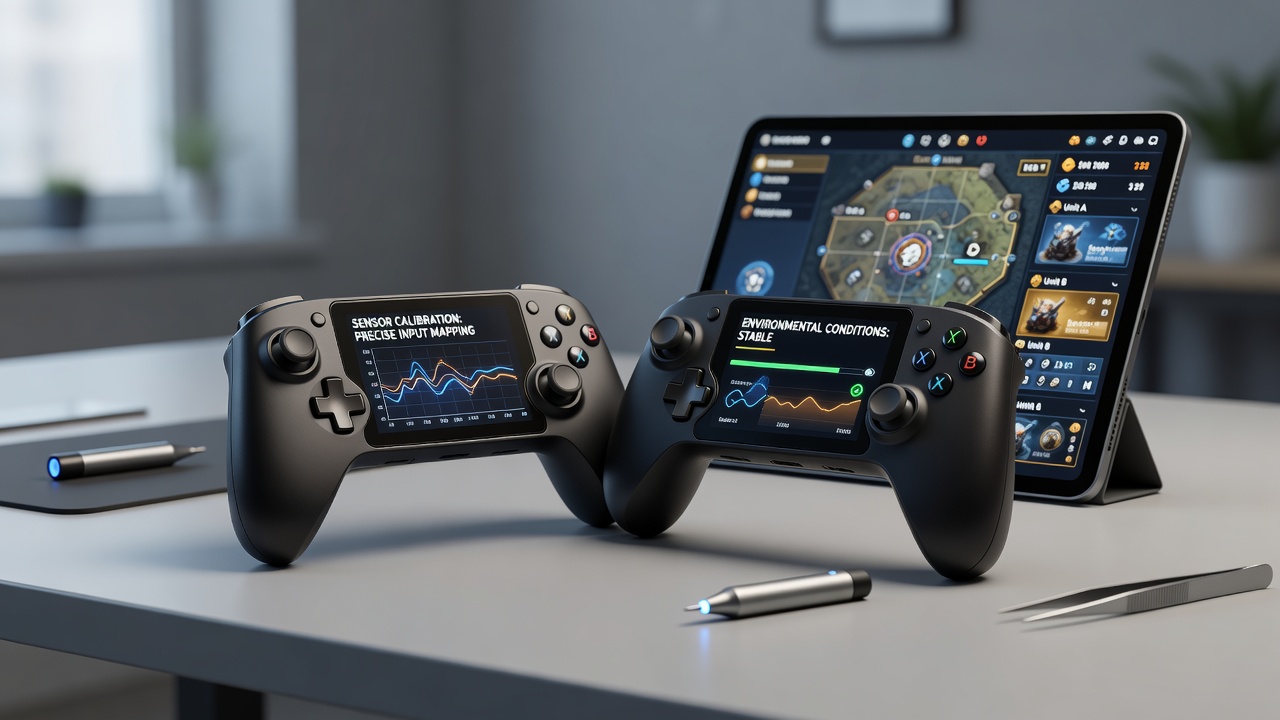
Sensor Calibration Routines Power Precise Input Mapping in Portable Controllers for Strategy Games Under Varying Conditions
Portable controllers incorporate multiple sensors including accelerometers, gyroscopes, and magnetometers that translate physical movements into digital commands for strategy titles. These devices operate in environments where temperature shifts, humidity changes, and vibrations alter sensor outputs, which creates drift and misalignment in input mapping. Calibration routines address these variables by establishing baseline readings and applying real-time corrections that maintain accuracy during extended play sessions on handheld platforms.Core Components of Sensor Systems
Modern portable controllers integrate inertial measurement units that combine three-axis accelerometers with gyroscopic sensors to detect orientation and motion. Data from these components feeds directly into game engines for actions such as unit selection, camera panning, and resource allocation in strategy games. Observers note that manufacturers embed firmware-level algorithms that sample sensor values at high frequencies while filtering noise caused by external factors like body heat or ambient pressure fluctuations.
Calibration begins with a static zeroing process where the controller rests motionless to record gravitational and magnetic references. Dynamic routines follow during gameplay as software monitors ongoing deviations and adjusts mapping coefficients accordingly. Studies from research institutions show that without these steps, input lag and positional errors compound quickly in titles requiring pixel-perfect cursor placement or timed commands.
Calibration Process and Input Mapping Techniques
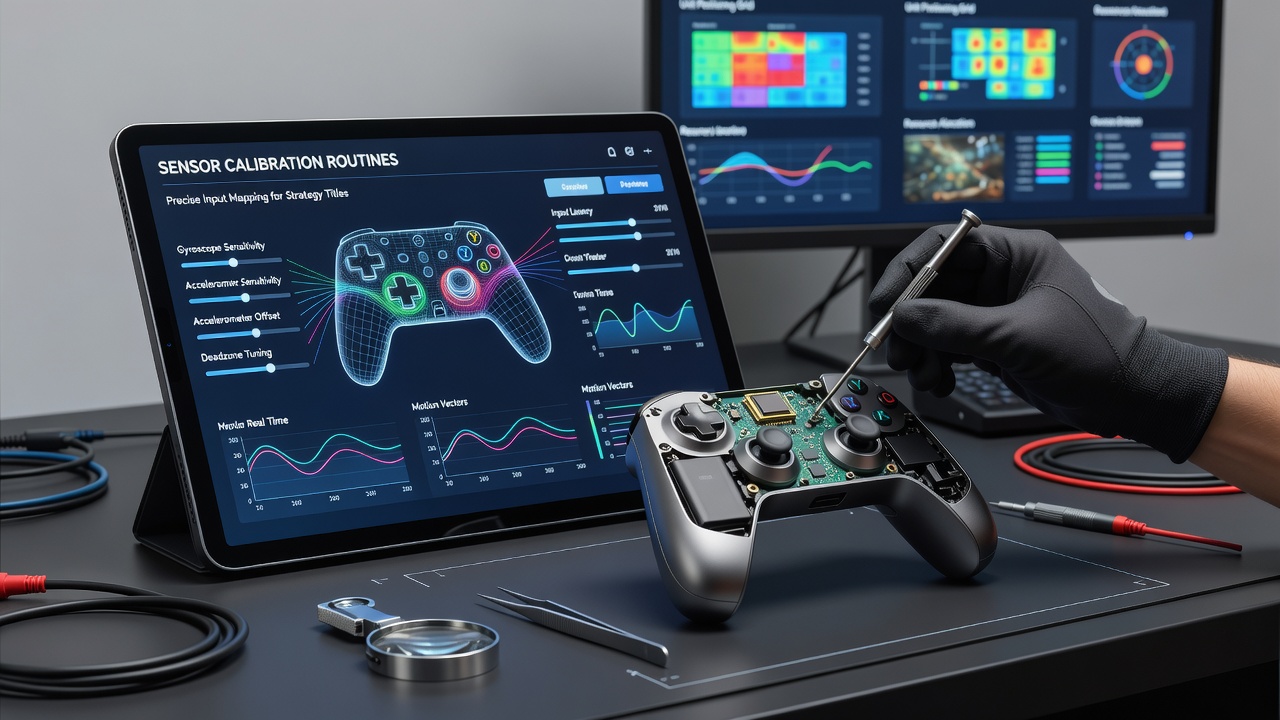
Routines execute in layered stages that first isolate individual sensor biases then reconcile combined outputs through fusion algorithms. Temperature compensation tables stored in controller memory apply offsets derived from onboard thermistors, while humidity sensors trigger secondary adjustments when moisture levels affect capacitive touch layers. Engineers have documented how these steps enable consistent performance whether players operate devices in air-conditioned rooms or outdoor settings with rapid weather shifts.
Input mapping translates calibrated sensor data into game-specific actions through customizable profiles that account for dead zones, sensitivity curves, and gesture recognition thresholds. Strategy titles benefit particularly because they often rely on hybrid control schemes blending analog sticks with motion inputs for multitasking across multiple on-screen elements. In June 2026 several hardware updates introduced enhanced calibration APIs that allow developers to query environmental metadata directly from controllers, streamlining profile switching across devices.
Performance Under Environmental Variability
Fluctuating conditions introduce measurable interference that calibration routines mitigate through periodic re-zeroing triggered by detected anomalies. Research indicates accelerometers experience scale factor changes of up to several percent per degree Celsius, while gyroscopes accumulate integration errors that grow exponentially without correction. Portable devices used in competitive strategy events therefore incorporate adaptive sampling rates that increase during detected instability periods.
Players encounter these systems most noticeably during long sessions where controller temperature rises from internal electronics and user grip. Automated routines pause gameplay input briefly to perform micro-calibrations without interrupting flow, then resume with updated mapping parameters. Data collected across multiple device generations reveals consistent reduction in positional variance when such protocols remain active versus disabled states.
Integration With Strategy Game Ecosystems
Game developers access calibration status through standardized software interfaces that expose real-time confidence metrics for each sensor channel. This enables titles to adapt control schemes dynamically, such as increasing dead zones during high-vibration transit scenarios or tightening sensitivity when stable indoor conditions prevail. Observers have recorded cases where cross-platform strategy releases maintained identical input feel across handheld and stationary setups precisely because shared calibration frameworks compensated for hardware differences.
Industry reports from the National Institute of Standards and Technology outline measurement protocols that manufacturers reference when validating controller performance across temperature ranges from 0 to 40 degrees Celsius. These guidelines influence firmware design choices that affect how strategy titles interpret fine motor inputs during critical decision moments.
Future Refinements and Standardization Efforts
Work continues on machine learning models that predict sensor drift patterns based on usage history and environmental telemetry. Early implementations already demonstrate improved longevity of calibration accuracy between manual interventions. Academic sources including publications from European research consortia highlight how standardized data formats facilitate interoperability between controllers from different vendors when used wth the same strategy game titles.
Additional refinements focus on reducing calibration duration while preserving precision, allowing seamless transitions between play environments. Figures from ongoing trials show measurable gains in input consistency metrics when controllers employ predictive compensation alongside traditional correction methods.
Conclusion
Sensor calibration routines form an essential foundation for reliable input mapping in portable controllers used with strategy games across diverse conditions. Through systematic bias removal, environmental compensation, and dynamic fusion techniques these processes sustain performance despite temperature, humidity, and motion variables. Continued advancements in firmware and standardization support expanding use cases while preserving the precision required for complex gameplay interactions.