The Expanding Role of Distributed Networks in Connecting Indie Developers Across Continents for Joint Projects
Zara Patterson · May 18, 2026

The Expanding Role of Distributed Networks in Connecting Indie Developers Across Continents for Joint Projects
Distributed networks have grown into a practical foundation for indie developers who work together on game projects from different continents, and observers note that these systems rely on peer-to-peer connections, decentralized storage protocols, and synchronized version-control layers that keep files consistent without a single central server. Data from recent industry analyses shows that such setups reduce latency issues during live editing sessions while allowing teams in Tokyo, Berlin, and Austin to push updates simultaneously, and researchers point to open-source tools built on these networks as the reason many small studios now complete cross-border titles on tighter schedules.
How Distributed Networks Support Global Indie Collaboration
Teams gain access to shared code repositories that replicate across multiple nodes, which means a developer in one time zone can continue work while another sleeps, and synchronization happens automatically when connections reestablish. Industry reports indicate that bandwidth costs drop because data travels through nearby nodes rather than routing through distant cloud centers, and case studies from studios in 2025 revealed average savings of 30 percent on infrastructure when they switched from traditional servers to distributed alternatives. What's interesting is that these networks also incorporate built-in encryption layers that protect intellectual property during transfers, so partners maintain control over their contributions without exposing full project files.
People who've studied adoption patterns find that indie groups often start with lightweight protocols such as IPFS for asset storage and then layer real-time collaboration engines on top, and this modular approach lets newcomers join existing projects without heavy onboarding. Figures from developer surveys conducted across Europe and North America show that 62 percent of respondents had participated in at least one distributed-network project by early 2026, while similar trends appeared in emerging markets where connectivity remains uneven.
Real-World Projects and Geographic Reach
One documented example involves a puzzle-adventure game assembled by contributors from Australia, Canada, and South Korea who coordinated through a distributed ledger that tracked every asset change, and the final build shipped three weeks ahead of the original internal deadline. Another team in South America used similar infrastructure to integrate audio work from European composers directly into their engine builds, cutting revision cycles from days to hours. Observers note that these successes stem from the networks' ability to handle large binary files without forcing everyone to download complete copies each time a change occurs.
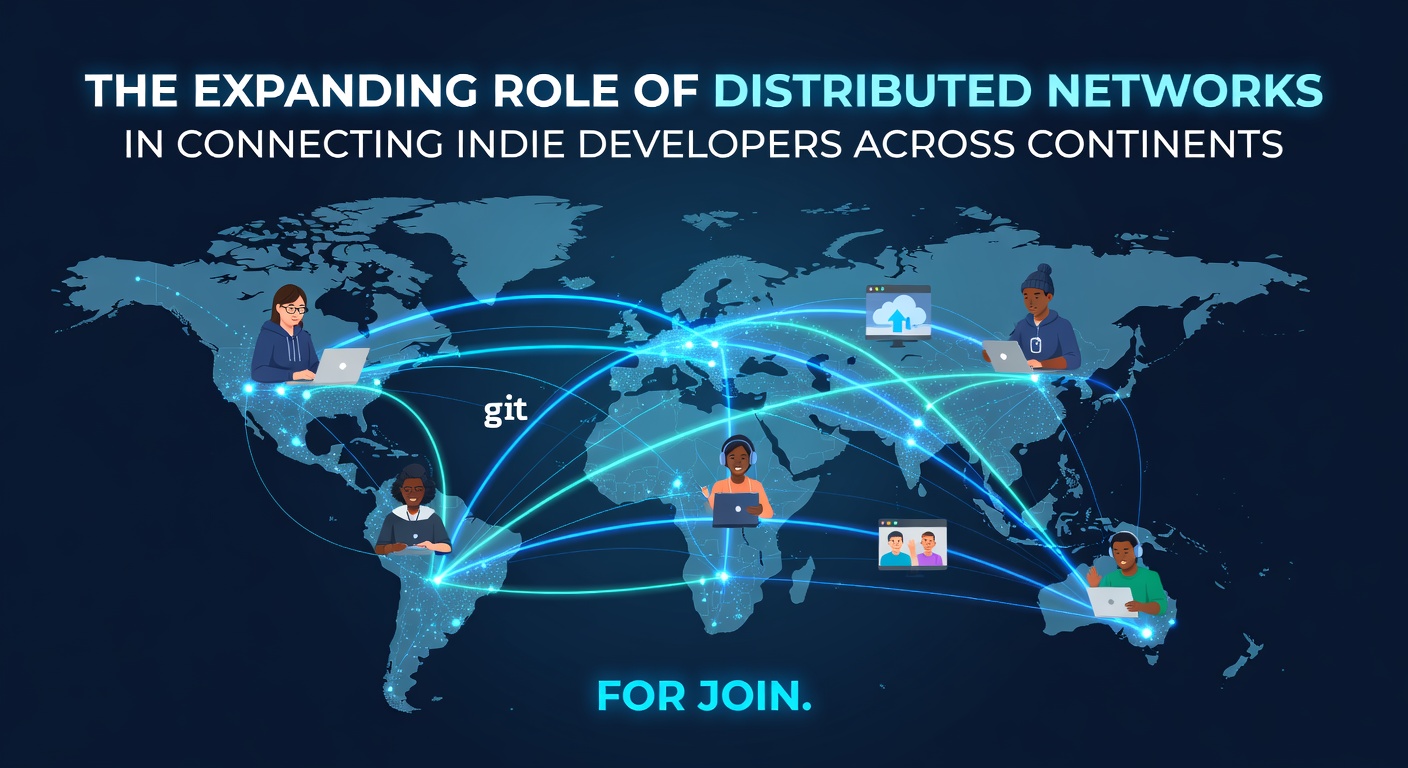
By May 2026 several platforms had introduced new routing optimizations that prioritize low-bandwidth regions, which helped studios in Southeast Asia and parts of Africa join ongoing projects more reliably. Research indicates that the number of registered cross-continental indie collaborations increased 47 percent year-over-year after these updates rolled out, and trade associations tracking the sector report that joint titles now account for a growing share of Steam's indie releases.
Technical Mechanisms Behind Seamless Integration
Distributed networks operate through consensus algorithms that validate changes before they propagate, and this process prevents conflicting edits from breaking builds while still allowing parallel contributions. Developers often combine these networks with containerized environments that spin up identical test setups on any participating machine, and the result is consistent behavior across Windows, macOS, and Linux machines without manual configuration. Evidence from academic papers published in 2025 demonstrates that conflict-resolution times dropped by more than half when teams adopted these combined workflows compared with centralized alternatives.
Security features embedded in the protocols include zero-knowledge proofs that let contributors verify asset integrity without revealing source material, and this capability has proven useful for sensitive narrative work or proprietary mechanics. Government digital-innovation programs in Canada and the European Union have begun offering grants specifically for projects that leverage distributed infrastructure, which further accelerates adoption among smaller teams lacking large budgets.
Challenges and Ongoing Adaptations
Although performance gains are clear, some developers still encounter occasional node-discovery delays during peak hours, and those who manage larger teams report that monitoring tools require extra setup compared with conventional cloud dashboards. Yet solutions continue to emerge, such as automated health-check scripts that reroute traffic around congested nodes, and community-driven documentation has grown detailed enough that new participants can follow standardized checklists. Data collected by international game developer organizations shows that training resources focused on distributed workflows now appear in more than 40 languages, which broadens participation beyond English-dominant regions.
Conclusion
Distributed networks have moved from experimental status to operational backbone for many indie collaborations that span multiple continents, and the pattern of growth shows no sign of slowing as protocols mature and regional connectivity improves. By May 2026 the combination of faster routing, grant support, and expanding documentation had created measurable increases in the number and quality of joint projects, while technical safeguards kept intellectual property secure throughout the process. Those tracking the sector expect continued integration with emerging standards that will further lower barriers for developers who want to pool talent regardless of physical location.