Unified Development Frameworks Facilitate Efficient Transitions from VR Prototypes to PC for Indie Creators
Leon Vogel · Aug 22, 2026
Unified Development Frameworks Facilitate Efficient Transitions from VR Prototypes to PC for Indie Creators
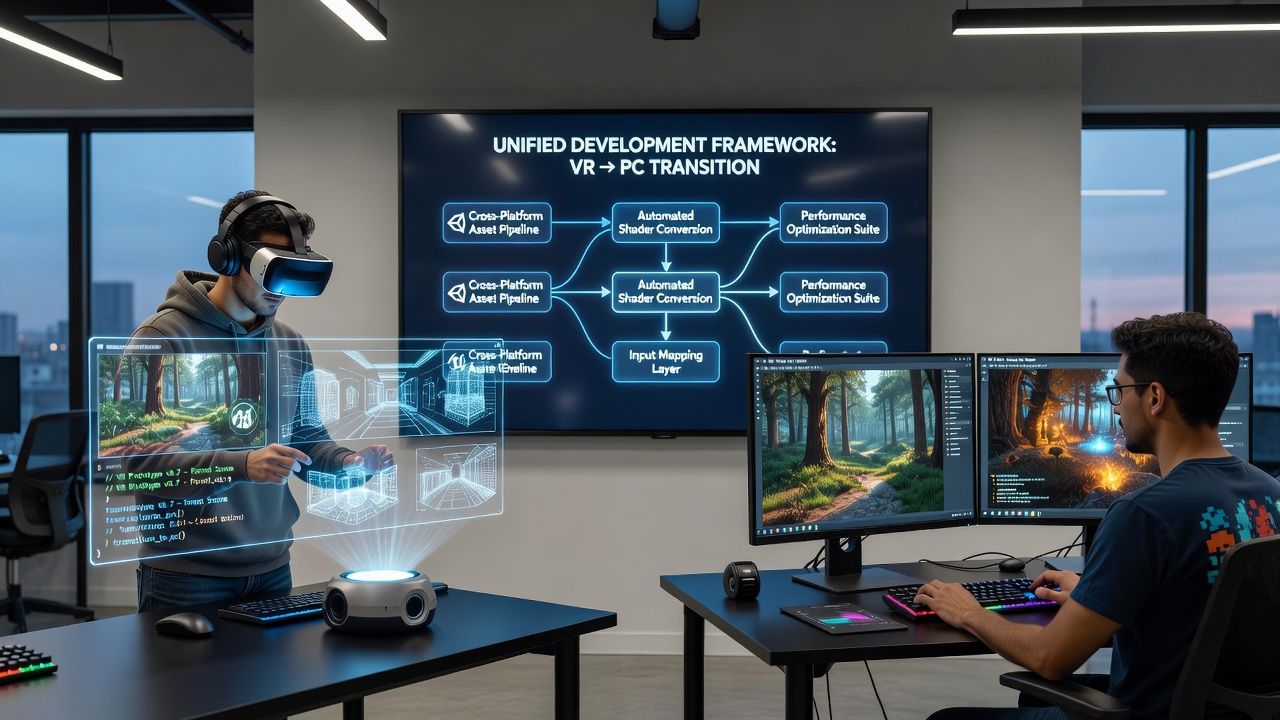
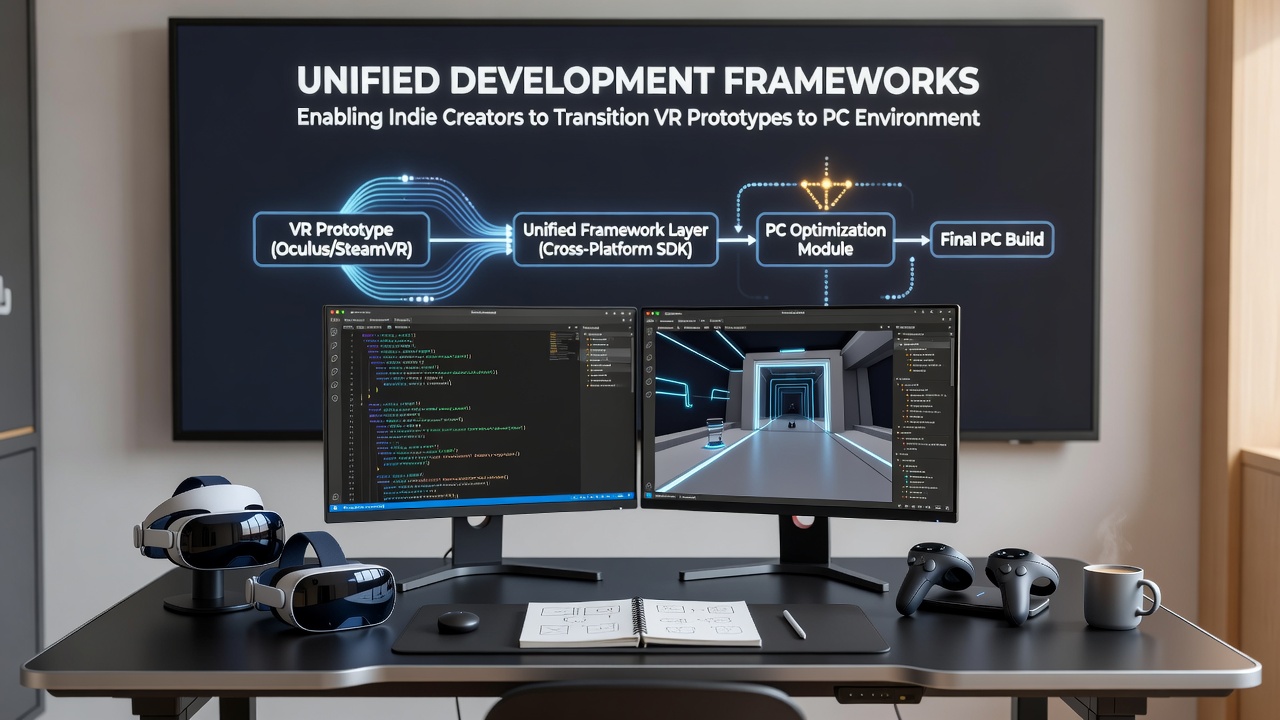
Unified development frameworks have streamlined how indie creators move VR prototypes into full PC environments, and data from industry reports shows these tools reduce porting time by integrating asset pipelines, rendering layers, and input systems under single codebases. Researchers at various institutions have documented cases where creators complete the shift from headset-based testing to desktop deployment in weeks rather than months, because the frameworks maintain consistent physics simulations and shader compatibility across platforms.
Core Mechanisms in Cross-Platform Support
Engines such as Unity and Unreal Engine provide modular components that handle VR-specific tracking while allowing direct export to PC builds, and observers note that developers adjust camera rigs and controller mappings through shared scripts instead of rewriting entire sections. Studies indicate that when creators use these unified layers, they preserve performance metrics from the prototype stage, which means frame rates and interaction latency stay within acceptable ranges once the project scales to higher-resolution displays. In August 2026 several framework updates introduced automated validation checks that flag platform-specific conflicts before compilation, which helps teams avoid common bottlenecks during the final export phase.
Asset Pipeline Integration
One study revealed that indie studios leveraging shared asset management systems cut down on texture conversion steps, since the frameworks apply compression settings that work for both VR headsets and PC monitors without separate processing runs. Those who've examined workflow logs find that material editors sync lighting data across devices, so a prototype tested in a virtual space retains its visual fidelity when moved to a desktop version. This continuity matters because it keeps the original design intent intact through multiple iterations.
Real-World Applications Among Indie Teams
Take one developer collective that built a VR puzzle prototype and then used framework plugins to adapt it for PC release, where input remapping tools handled keyboard and mouse controls alongside motion controllers. Data shows similar projects often reach public testing phases faster when they avoid duplicate coding for each environment, and figures from developer surveys confirm that smaller teams allocate saved hours toward content expansion rather than technical fixes. What's interesting is how these frameworks also support hybrid testing setups, letting creators run simultaneous VR and PC sessions to compare user interactions in real time.
Academic sources have tracked how open plugin ecosystems extend framework capabilities, and research indicates that community-contributed modules for audio spatialization or haptic feedback transfer smoothly between hardware setups. According to a report from the International Game Developers Association, indie groups using these extensions report fewer compatibility issues during the prototype-to-release cycle. Yet the process still requires careful version control, because even unified tools can introduce drift if asset libraries are not synchronized across team members.
Technical Considerations for Efficient Scaling
Performance profiling tools built into the frameworks allow creators to monitor resource usage from the VR stage onward, and this visibility helps them optimize models so they scale without major rework when targeting PC hardware. Observers note that shader compilers in these environments generate variants automatically for different graphics APIs, which reduces manual adjustments during the transition. Evidence from multiple case logs suggests that when teams establish baseline VR performance targets early, the subsequent PC versions maintain those standards with minimal additional tuning.
Input and Interaction Mapping
Frameworks offer unified input systems that abstract device differences, and developers map VR hand tracking to PC mouse or gamepad equivalents through visual scripting interfaces rather than low-level code changes. This approach means a prototype's core mechanics remain functional while the team expands interaction options for desktop users. Researchers have found that such abstraction layers also support future expansions, like adding mixed-reality elements without rebuilding the foundation.
Industry Data and Adoption Patterns
Figures from recent industry analyses show increased adoption of unified frameworks among independent creators focused on VR-to-PC pipelines, and this trend aligns with broader shifts toward modular development practices. A paper hosted by the National Science Foundation highlights how shared toolchains lower entry barriers for small teams by consolidating learning curves around single environments. Those patterns indicate that creators who master one framework often handle multiple platform releases with greater consistency over successive projects.
Conclusion
Unified development frameworks continue to shape how indie creators bridge VR prototypes and PC environments through integrated tools and shared pipelines, and ongoing updates keep these processes aligned with evolving hardware standards. The available data points to measurable efficiencies in time and resource allocation when teams apply these systems from the initial design phase onward.