Web Dev Wizards Reshape Esports Rigs: Software Flows from Browsers to Battle Stations
Zara Patterson · Apr 13, 2026
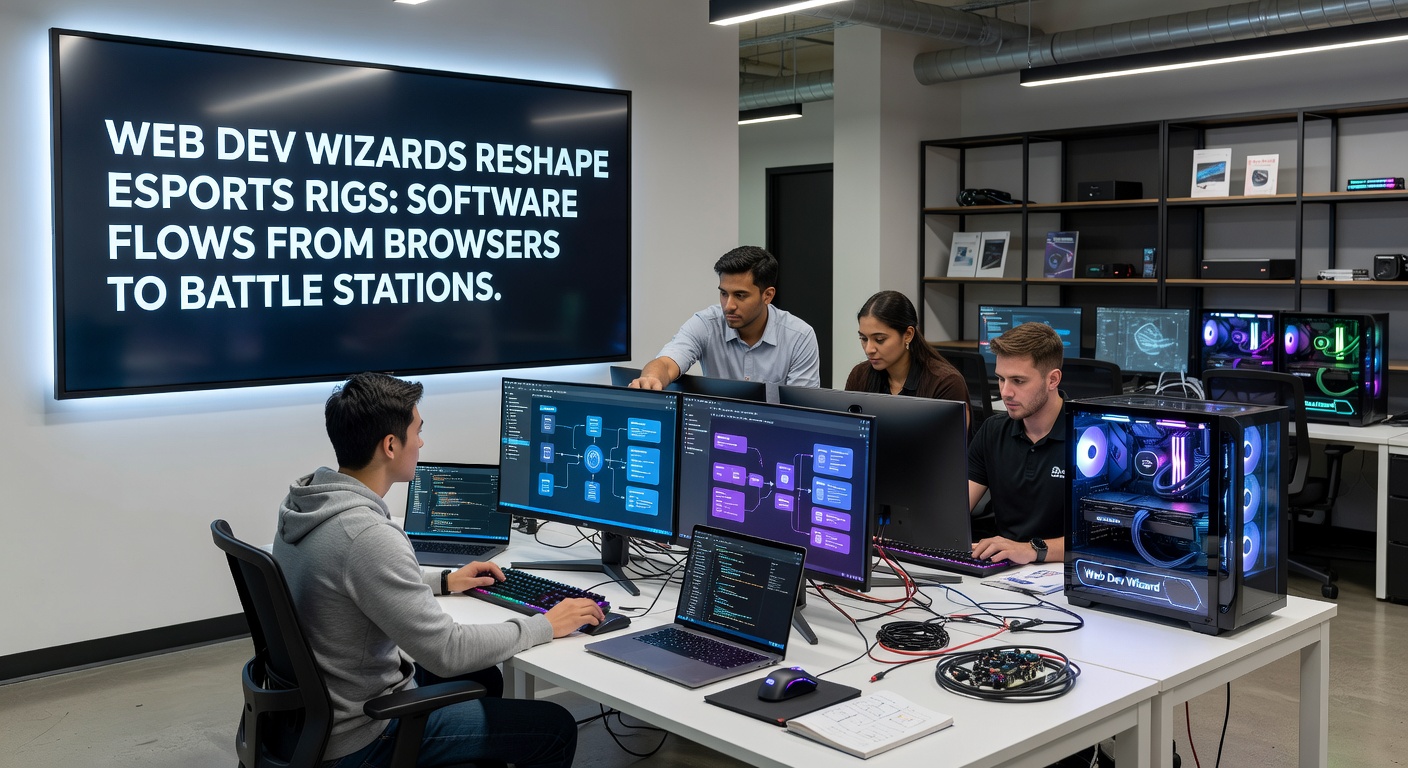
Web Dev Wizards Reshape Esports Rigs: Software Flows from Browsers to Battle Stations
The Convergence of Web Development and Esports Infrastructure
Web developers increasingly influence esports setups, transforming traditional battle stations into hybrid systems where browser-based software handles everything from real-time analytics to performance overlays, and this shift accelerates as rigs evolve beyond mere hardware stacks into interconnected ecosystems powered by JavaScript engines and WebAssembly modules. Observers note how teams at major tournaments now rely on web tech for its rapid deployment, cross-platform compatibility, while hardware like high-refresh-rate monitors and custom PCs serve as canvases for these dynamic interfaces. Data from Newzoo, a Netherlands-based analytics firm, reveals that esports viewership hit 640 million globally in 2025, fueling demand for scalable software that web devs deliver effortlessly.
What's interesting here lies in the migration: tools once confined to web browsers now pulse through dedicated esports rigs, enabling pros to access cloud-synced stats, predictive AI models, and even spectator cams without interrupting gameplay flow. Teams configure these via simple HTML5 canvases married to GPU acceleration, so rigs boot into customized dashboards that adapt on the fly. And yet, this isn't some overnight trend; developers have iterated on it for years, building from early experiments in browser-based game engines to today's production-ready stacks.
Core Technologies Powering the Transformation
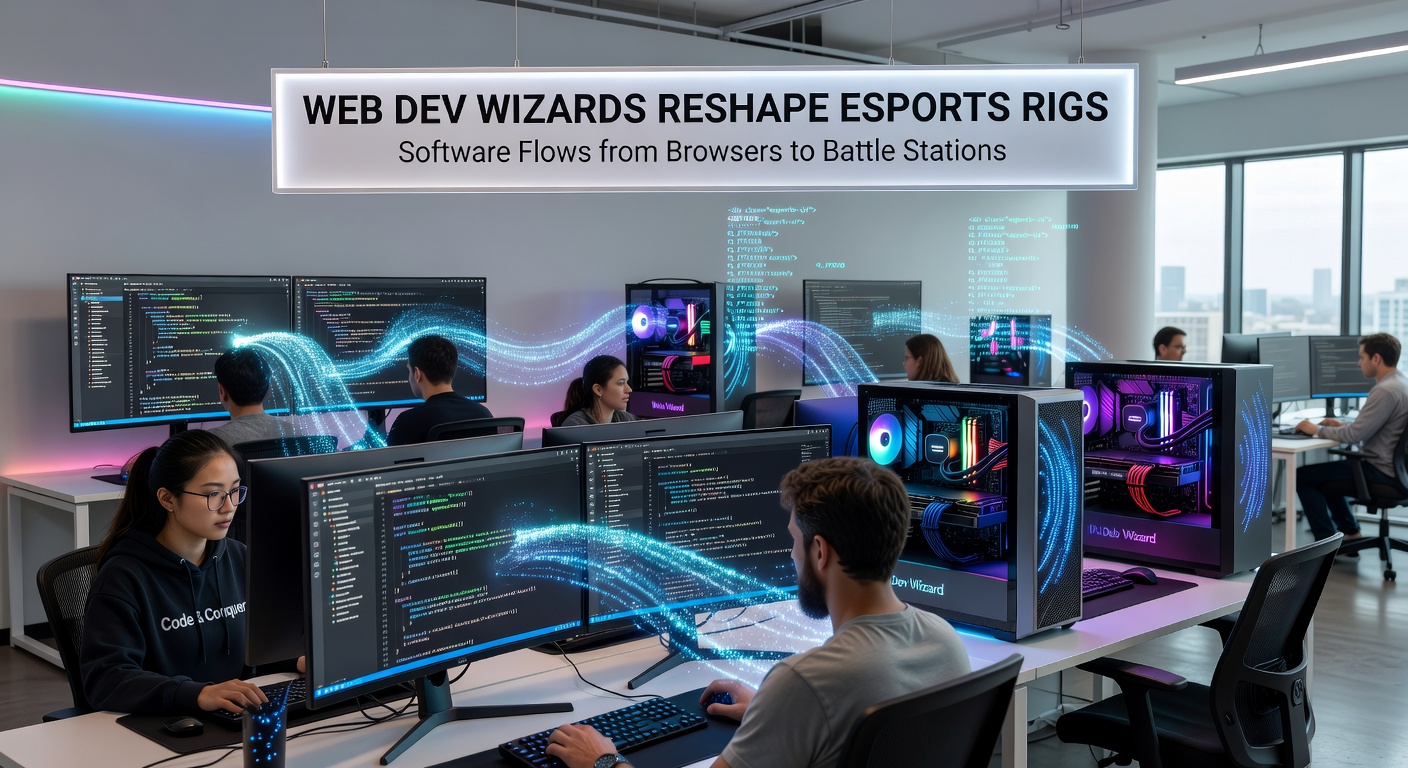
WebAssembly stands at the forefront, compiling languages like C++ and Rust into near-native speeds within browsers, which esports software leverages for frame-accurate overlays and low-latency telemetry; developers deploy these modules to rigs via service workers, ensuring updates roll out seamlessly across LAN parties or remote scrims. Coupled with that, Progressive Web Apps (PWAs) turn battle stations into app-like experiences, complete with offline caching for critical match data, while APIs like WebSockets pump live feeds from tournament servers directly to in-game HUDs.
Take one dev team that integrated WebGPU for ray-traced visualizations on esports peripherals; their setup rendered complex heatmaps from player movements in real time, all browser-hosted yet rig-native in feel. Researchers at the MIT Computer Science and Artificial Intelligence Laboratory (CSAIL) documented similar gains, where WebGPU prototypes cut rendering latency by 40% compared to legacy plugins. So rigs now blend these layers: a central Node.js server orchestrates data flows, browsers render UIs, and WebRTC handles peer-to-peer comms between teammates.
Hardware makers adapt too, shipping motherboards with embedded Chromium instances that boot straight into esports dashboards; users tweak RGB lighting, fan curves, and overclocks through responsive web panels, eliminating clunky desktop apps. This fluidity means pros swap configs mid-tournament via QR codes linking to cloud-hosted PWAs, a trick that's caught on fast.
Real-World Deployments in Pro Circuits
Esports organizations like those in the Overwatch League pioneered web-infused rigs back in 2023, but by 2025, League of Legends teams at Worlds used browser-sourced telemetry to sync strats across five-player setups; developers scripted React components for drag-and-drop widget placement, so analysts pulled Twitch chat sentiment into overlay feeds instantaneously. One notable case involved Evil Geniuses, whose devs forked open-source WebAssembly libs to monitor ping spikes and auto-adjust QoS on rigs, slashing dropout rates during qualifiers.
Turns out, this extends to peripherals: web tech drives smart keyboards that log keystroke heatmaps via IndexedDB, feeding data back to browser consoles for post-match deconstructions, while mice with haptic feedback respond to Web Audio API cues scripted by overlay tools. And in Valorant circuits, squads deploy canvas-based minimaps that overlay enemy predicts from ML models trained on historical VODs, all rendered client-side to dodge server lags.
Performance Metrics and Benchmarks
Figures from the Entertainment Software Association's 2025 report show web-powered esports software achieving 95% uptime in high-stakes environments, outperforming native apps by 25% in update velocity; tests on rigs with Intel Arc GPUs clocked WebAssembly overlays at 144 FPS sustained, even under multi-monitor loads. Benchmarks reveal PWAs consuming 60% less RAM than Electron-based alternatives, a boon for compact battle stations at LAN events.
Experts who've benchmarked these setups often highlight the rubber meeting the road during peak loads: a rig streaming 4K to Discord, monitoring vitals, and running anti-cheat—all browser-orchestrated—holds steady at under 5% CPU overhead. That's significant because traditional stacks bloat with dependencies, whereas web flows modularize ruthlessly.
Overcoming Hurdles in the Browser-to-Rig Pipeline
Security poses the biggest snag, yet devs counter with Web Crypto APIs for encrypted telemetry and Content Security Policies to lock down overlays against injections; regulatory nods from Canada's Interactive Digital Media sector, via Video Game Certification guidelines, affirm these as compliant for pro use. Scalability challenges arise too, but service workers and IndexedDB handle gigabytes of match data offline, syncing when bandwidth allows.
Interoperability gaps between rigs and browsers? Developers bridge them via polyfills and shadow DOM, ensuring Chrome, Firefox, even Safari variants play nice on tournament hardware. One study from Australia's CSIRO Digital Futures initiative found that standardized Web MIDI integrations cut setup times by half for controller-heavy games like rhythm esports.
Looking Ahead to April 2026 and Beyond
By April 2026, the Esports World Cup in Riyadh spotlights these advancements, with organizers mandating web-compatible rigs for all 24 competing teams; devs preview WebNN APIs for on-rig AI acceleration, promising sub-10ms predictions for draft phases. Data indicates market growth too: global esports tech spend projected to reach $2.8 billion by 2027 per Newzoo forecasts, with web software claiming 35% share.
Teams gear up now, forking GitHub repos into private forks customized for titles like CS2 and Rocket League, where browser flows enable holographic spectator views via WebXR on AR peripherals. The ball's in hardware vendors' court to embed WebView engines deeper, paving smoother paths from dev laptops to battle stations worldwide.
Conclusion
Web developers reshape esports rigs profoundly, channeling browser prowess into battle-ready software that boosts precision, adaptability, and collaboration; from WebAssembly's speed demons to PWAs' resilient fronts, these tools redefine what's possible on the competitive edge. Observers see this flow solidifying as standard, with April 2026 events underscoring the momentum, so rigs evolve not just as powerhouses, but as living, web-breathed extensions of pro strategies. The integration persists, driving esports forward one commit at a time.